

HOW TO TRAIN FOR A 100KM WALKING CHALLENGE
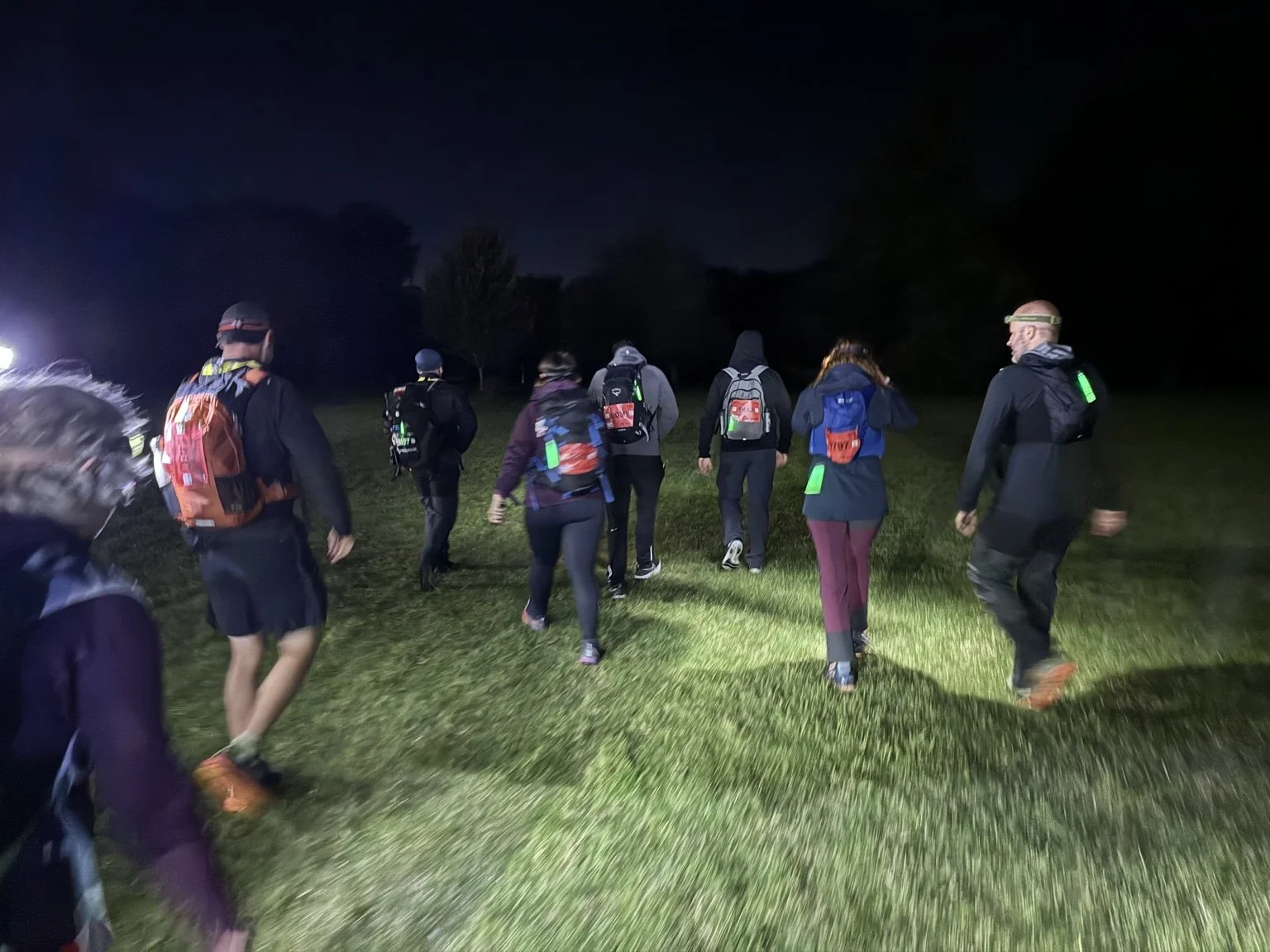
A practical 16–20 week training guide to help you prepare for 62 miles / 100km — through the day, into the night and all the way to the finish
A 100km walking challenge is a very different proposition from a marathon or even a 50km event.
You're not simply preparing to walk further. You're preparing to spend a very long time on your feet, potentially walking from daylight into darkness and continuing when your body would normally be thinking about bed rather than another 20 miles.
Pacing, nutrition, foot care, clothing and rest stops all become increasingly important. So does the ability to keep making sensible decisions when you're tired.
And then there's the mental challenge.
At 50km you've already completed an ultra-distance walk.
At 50km on a 100km challenge, you're only halfway.
That's why preparation needs to be about much more than simply increasing your longest training walk.
STEPPING UP TO 100KM
HOW LONG SHOULD YOU TRAIN FOR 100KM?
If you're already a regular walker with some long-distance experience, give yourself around 16–20 weeks to prepare properly.
If 100km will be your first major walking challenge, I'd give yourself longer — and ideally build some marathon or 50km experience into your preparation first.
You don't need to become an elite athlete. You do need to gradually prepare your legs, feet, stomach and head for a very long day — and potentially night — on the move.
YOU DO NOT NEED TO WALK 100KM IN TRAINING.
Your preparation comes from consistent walking, progressively longer days, back-to-back sessions and learning how your body responds when you're tired.
I've completed 100km challenges myself. The biggest lesson? Respect the distance.
YOUR 16–20 WEEK 100KM TRAINING PLAN
Training for 100km isn't about seeing how close you can get to 100km before the event.
It's about gradually building your endurance, becoming comfortable with very long periods on your feet, learning to walk on tired legs and testing everything you'll rely on during the challenge.
As the weeks progress, back-to-back walks become more important, and you should include some deliberate walking in darkness too.
WEEKS 1–4 — BUILD THE BASE
Long walk: 8–12 miles / 13–19km
Establish a consistent routine with two or three shorter walks during the week and one longer weekend walk.
Include some strength work and varied terrain where possible.
At this stage, consistency matters much more than huge distances.
WEEKS 5–8 — BUILD THE DISTANCE
Long walk: 12–18 miles / 19–29km
Gradually increase your weekend walks and start paying much more attention to your footwear, backpack, clothing, food and hydration.
Introduce occasional back-to-back weekends, with an easier walk the day after your long one.
WEEKS 9–14 — BUILD ENDURANCE
Long walk: 18–25 miles / 29–40km
This is the key part of your preparation.
Include regular back-to-back walking weekends — for example, a 20–25 mile Saturday followed by 8–12 miles on Sunday.
Not every weekend needs to be this big. Recovery weeks with reduced mileage are important too.
Start deliberately extending some walks into the evening so you experience walking when you're already tired and daylight disappears.
FINAL 4–6 WEEKS — PEAK & TAPER
Build towards your biggest training weekends rather than one enormous single walk.
A peak weekend might involve 25–30 miles / 40–48km one day followed by 10–15 miles / 16–24km the next.
That gives you a substantial amount of time on your feet without attempting anything close to the full 100km.
After your biggest training block, gradually reduce the volume and allow your body to recover before event day.
YOUR BIGGEST TRAINING WEEKEND IS NOT YOUR 100KM TEST.
You don't need to prove you can complete the distance beforehand. The challenge itself is where all those weeks of training come together.
DON'T CHASE MILEAGE AT ALL COSTS
More isn't automatically better.
If you're carrying an injury, struggling to recover between sessions or becoming progressively more exhausted, another huge training walk isn't necessarily the answer.
Consistency, recovery and arriving healthy at the start line matter more than hitting every number in a training plan.
TRAINING TO WALK THROUGH THE NIGHT
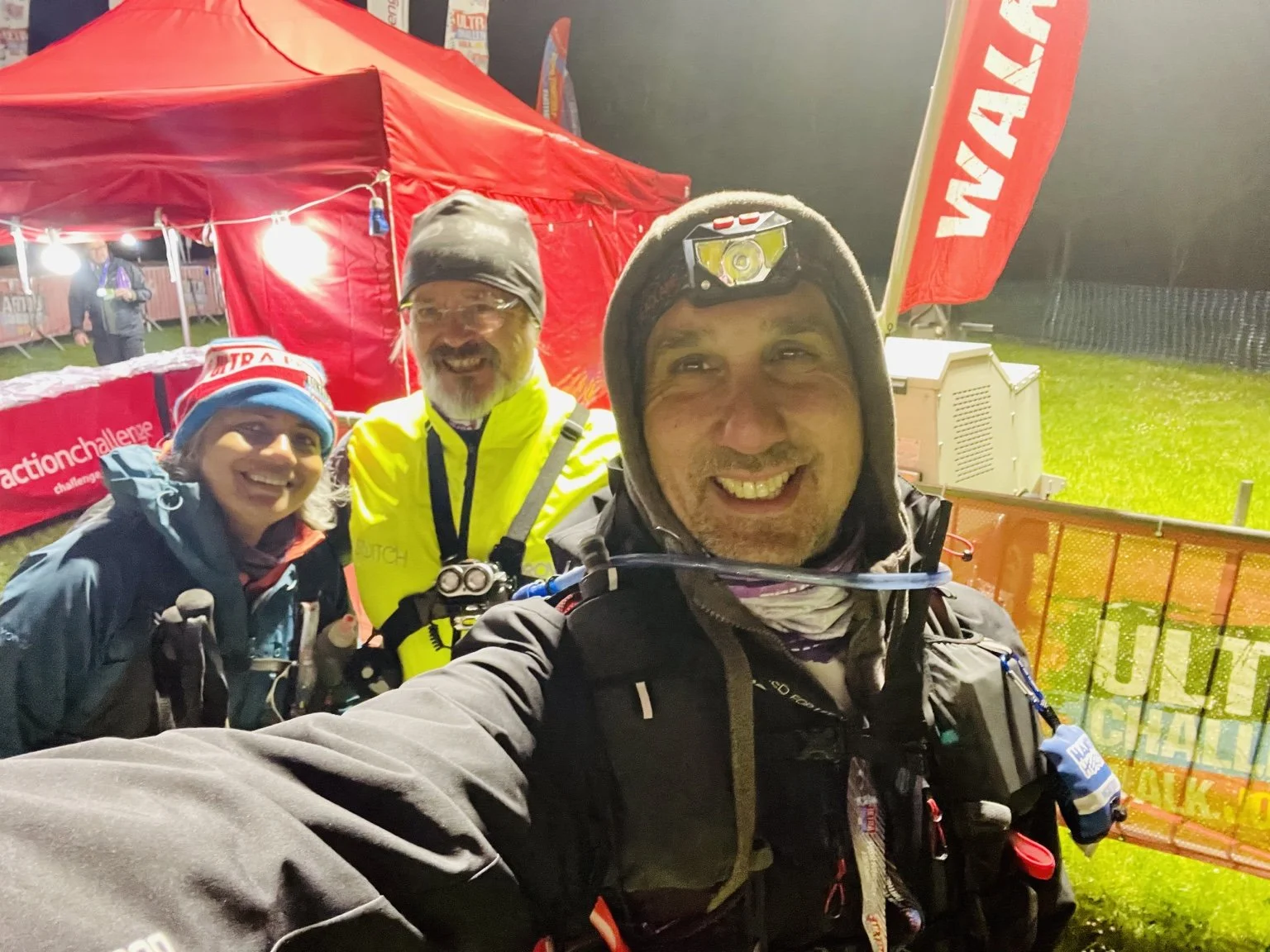
If your 100km challenge starts in the morning, there's a good chance you'll still be walking when the sun goes down.
That changes things more than you might expect.
The temperature drops. Trails look different. Your pace may slow. You're already tired, and suddenly you're navigating by the beam of a headtorch at a time when your body would normally be winding down for the night.
Don't make event night the first time you experience it.
PRACTISE IN THE DARK
During the later stages of your training, deliberately plan some walks that continue beyond sunset.
You don't need to walk through the entire night. The aim is to become comfortable using your headtorch, following a route and walking on uneven ground in darkness.
TEST YOUR HEADTORCH
Use the actual headtorch you're planning to take.
Make sure it's comfortable for several hours and know how long the battery lasts. Carry spare batteries or a suitable backup light if required by your event.
EXPECT THE TEMPERATURE TO CHANGE
What feels comfortable on a warm afternoon can feel very different several hours later.
Practise adding and removing layers without completely unpacking your bag, and think about what clothing you might want access to as darkness approaches.
YOUR PACE MAY CHANGE
Walking over uneven ground by headtorch is naturally slower than walking the same terrain in daylight.
Don't fight it.
Slow down where necessary and concentrate on moving safely and steadily.
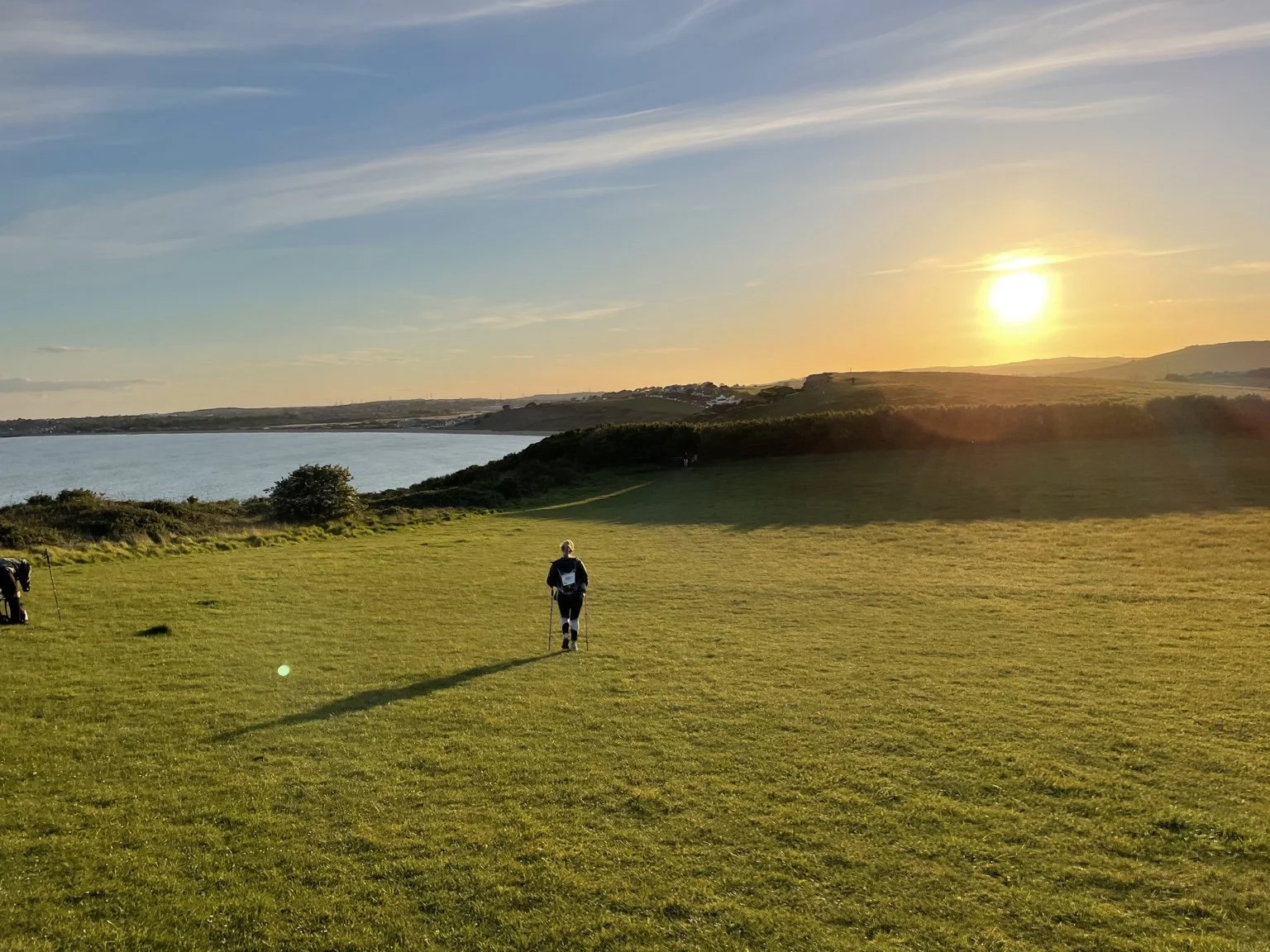
FROM DAYLIGHT TO DARKNESS
This transition is worth experiencing in training.
There's something psychologically significant about watching the sun disappear when you've already been walking for hours — particularly when you know you've still got a substantial distance ahead.
But once you've settled into it, night walking can become strangely enjoyable.
The world gets smaller. You're concentrating on the pool of light ahead of you, the next checkpoint and simply keeping moving.
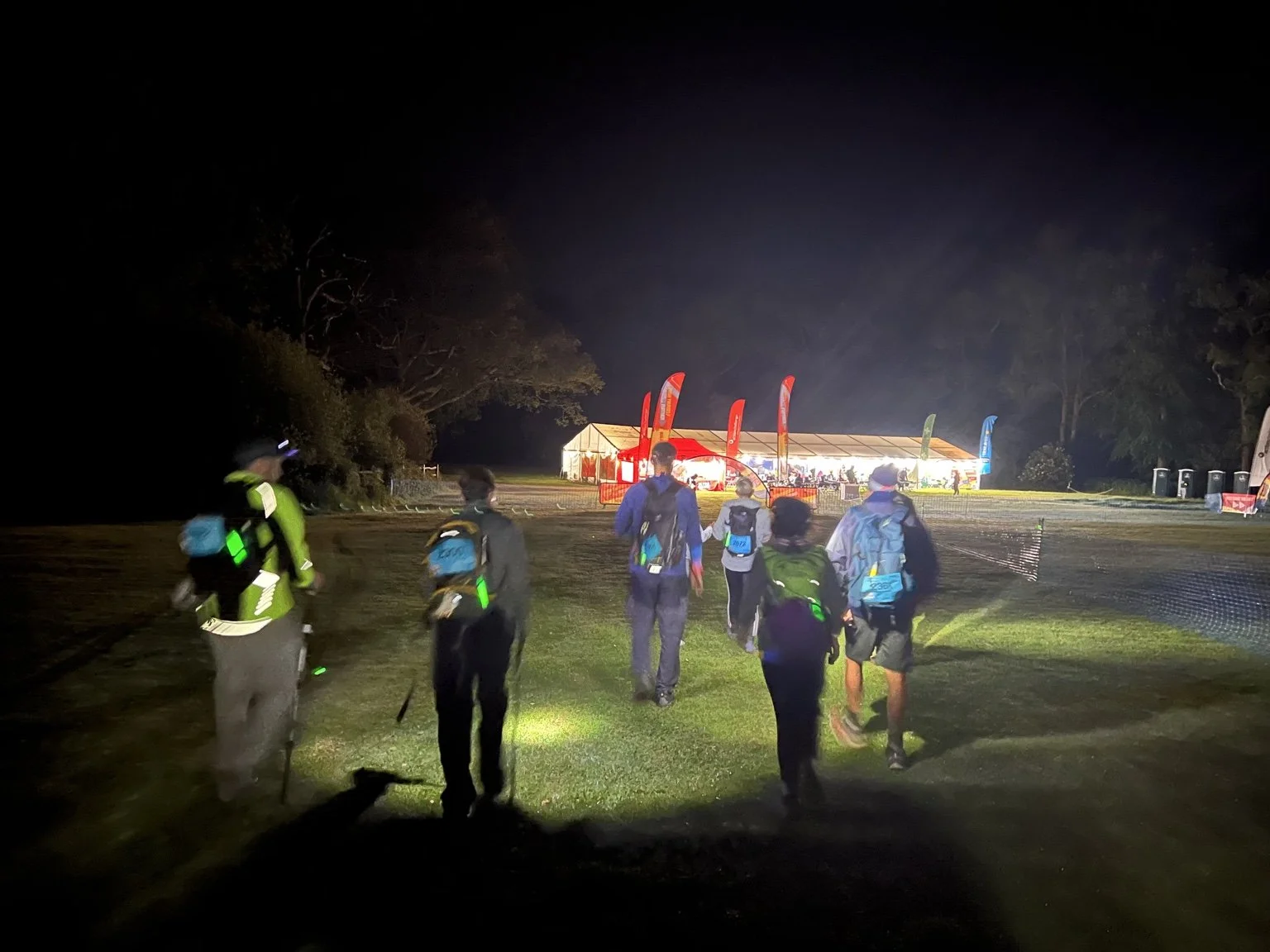
REST STOPS LOOK VERY DIFFERENT AT NIGHT
After hours in the dark, seeing the lights of the next rest stop can be a wonderful sight.
Use the stop to eat, refill your bottles, add layers, check your feet and sort out anything that's becoming uncomfortable.
But be careful about getting too comfortable.
Sitting somewhere warm when you're exhausted can make heading back into the darkness considerably harder.
PRACTISE THE NIGHT BEFORE YOU NEED THE NIGHT.
A headtorch, cold air and dark trails shouldn't be surprises waiting for you at 70km.
HOW TO FUEL FOR A 100KM WALK
Over 100km, fuelling isn't something you think about when you get hungry. It's part of your strategy from the beginning.
You'll potentially be eating and drinking across breakfast, lunch, dinner and into the night. Your appetite will change, foods you enjoyed earlier may become completely unappealing, and tiredness can make it surprisingly easy to forget to eat.
The answer isn't to carry a mountain of food.
On a supported 100km challenge, rest stops will usually play a major part in your fuelling strategy. Check your event guide beforehand so you know where they are and what's likely to be available.
EAT FROM THE START
Don't wait until you're running low on energy.
Start eating regularly during the early stages, even when you're feeling strong and don't particularly feel as though you need it.
LITTLE & OFTEN
Small amounts regularly are generally easier to manage than trying to eat enormous meals.
Use your long training walks to discover what, how much and how often works for you.
MIX SWEET & SAVOURY
After many hours, another sweet bar can become deeply unappealing.
Have options. Fruit, bars and sweets can all have their place, but sandwiches, potatoes, soup, pasta or other savoury food at rest stops can suddenly seem like the greatest meal you've ever eaten. 😄
KEEP DRINKING
Drink regularly throughout the challenge and refill at the rest stops.
Your needs will vary according to temperature, pace and how much you sweat. Electrolyte drinks can be useful, particularly in warmer conditions or across a very long day..
YOUR STOMACH NEEDS TRAINING TOO
You don't have to — but having the option is well worth the tiny amount of extra weight.
If your feet are wet from rain or sweat, changing into clean, dry socks at a rest stop can make a huge difference.
It also gives you an opportunity to check your feet properly and deal with any hotspots before they become blisters.
I've learned this one the hard way. On a long-distance challenge, if your feet start telling you there's a problem, listen to them. Stopping for a few minutes to tape a hotspot can save you a lot more pain later.
Your longest training walks aren't just testing your legs.
Use them to practise eating while you've already been walking for several hours.
If you're planning a big back-to-back weekend, treat it as an event-day rehearsal. Use the foods and drinks you're considering for the challenge and pay attention to what still appeals later in the day.
Don't introduce a completely new fuelling strategy at 70km.
THE HALFWAY STOP
On some supported 100km challenges, the halfway point is a major rest stop and may include a hot meal and access to a bag drop.
It can feel fantastic.
It can also be dangerous psychologically because 50km feels very much like somewhere you could stop.
Eat. Drink. Change socks or clothing if you need to. Sort out your feet. Take the rest you need.
Then get moving again.
BE CAREFUL ABOUT GETTING TOO COMFORTABLE.
Sitting somewhere warm with a plate of food after walking 50km can make another 50km seem like a spectacularly bad idea. 😄
KEEP SOMETHING YOU KNOW YOU'LL EAT
Even if the event is well catered, carry a few familiar foods of your own.
At some point you may not fancy what's available at a rest stop. Having something in your bag that you know you tolerate and actually want to eat can be extremely useful.
FEET, KIT & YOUR HALFWAY BAG
Over 100km, small kit problems have a very long time to become big ones.
Your shoes, socks, backpack and clothing should all have been thoroughly tested during training. But unlike a marathon or 50km challenge, you may also have the opportunity to change or add kit during the event.
Many organised 100km challenges offer baggage transfer to a major halfway rest stop and/or the finish. If yours does, make use of it.
Check your event guide carefully, as arrangements vary.
LOOK AFTER YOUR FEET
Carry a basic foot-care kit and deal with hotspots as soon as you notice them.
At a major rest stop, take the opportunity to remove your shoes, check your feet and change into clean, dry socks if necessary..
PREPARE FOR THE NIGHT
Even after a warm day, temperatures can drop considerably once darkness falls — and you'll probably feel the cold more as you become tired.
Have warmer clothing available before you need it.
KEEP YOUR DAY PACK LIGHT
Carry what you need between rest stops rather than trying to carry everything for the entire 100km.
Water, snacks, waterproofs, essential layers, foot-care items, phone, power bank and mandatory kit should cover most of your immediate needs.
USE YOUR DROP BAG
Your halfway bag gives you the opportunity to refresh yourself and prepare for the next stage.
Think of it as your night-time resupply, not simply somewhere to dump spare clothes.
WHAT SHOULD GO IN YOUR HALFWAY BAG?
CLOTHING
Spare technical T-shirt
Changing out of a sweaty top before heading into a colder night can make a huge difference.
Fleece or warm mid-layer
Once the temperature drops and fatigue sets in, you'll appreciate having another layer available.
Gore-Tex/waterproof jacket
Even if the day has been dry, conditions can change overnight. Have a proper waterproof outer layer available.
Clean, dry socks
I'd consider these close to essential. Your feet have already done 50km and still have another 50km to go.
Hat and lightweight gloves
Small, light and potentially very welcome during the coldest part of the night.
DON'T WAIT UNTIL YOU'RE COLD
This is one I've learned from experience.
The nights can become surprisingly cold, particularly when you've already been walking for many hours.
Don't wait until you're shivering before adding your fleece or waterproof layer. At the last major rest stop before darkness — or as soon as you notice the temperature dropping — think about what you're going to need for the hours ahead.
A dry technical shirt, fleece and Gore-Tex jacket can make heading back out into the night considerably more comfortable.
OTHER USEFUL ITEMS
Spare footwear
Optional, and only if you've trained in both pairs. Changing shoes can help if your feet have swollen or one pair is causing problems — but don't introduce unfamiliar footwear halfway through.
Fresh foot-care supplies
Blister plasters, tape or whatever you've successfully used during training.
Headtorch + spare batteries/backup light
Make sure you're ready before darkness arrives.
Power bank / charging cable
Navigation, photos, tracking and messaging can take their toll on your phone battery over such a long event.
Favourite snacks
Something you know you'll actually eat when you're tired.
HALFWAY IS YOUR RESET.
Eat. Refill. Check your feet. Change into dry clothing. Add your night layers. Sort your headtorch. Then get moving again.

I've learned that proper food can make an enormous difference. After hours of bars, snacks and food on the move, sitting down for something hot can feel like a complete reset. Just don't get too settled — you've still got another 50km to walk. 😬
THE MENTAL CHALLENGE OF WALKING 100KM
Your legs need training for 100km.
So does your head.
There will probably be points during the challenge when you feel strong and wonder what all the fuss was about.
There may also be points when you're tired, cold, your feet hurt and the finish feels impossibly far away.
That's normal on a distance this big.
The trick is not to think about the entire 100km all the time.
THE 60KM PROBLEM
Sixty kilometres sounds like an achievement — because it is.
But on a 100km challenge there's another way of looking at it:
You've still got 40km to go.
That's roughly another marathon.
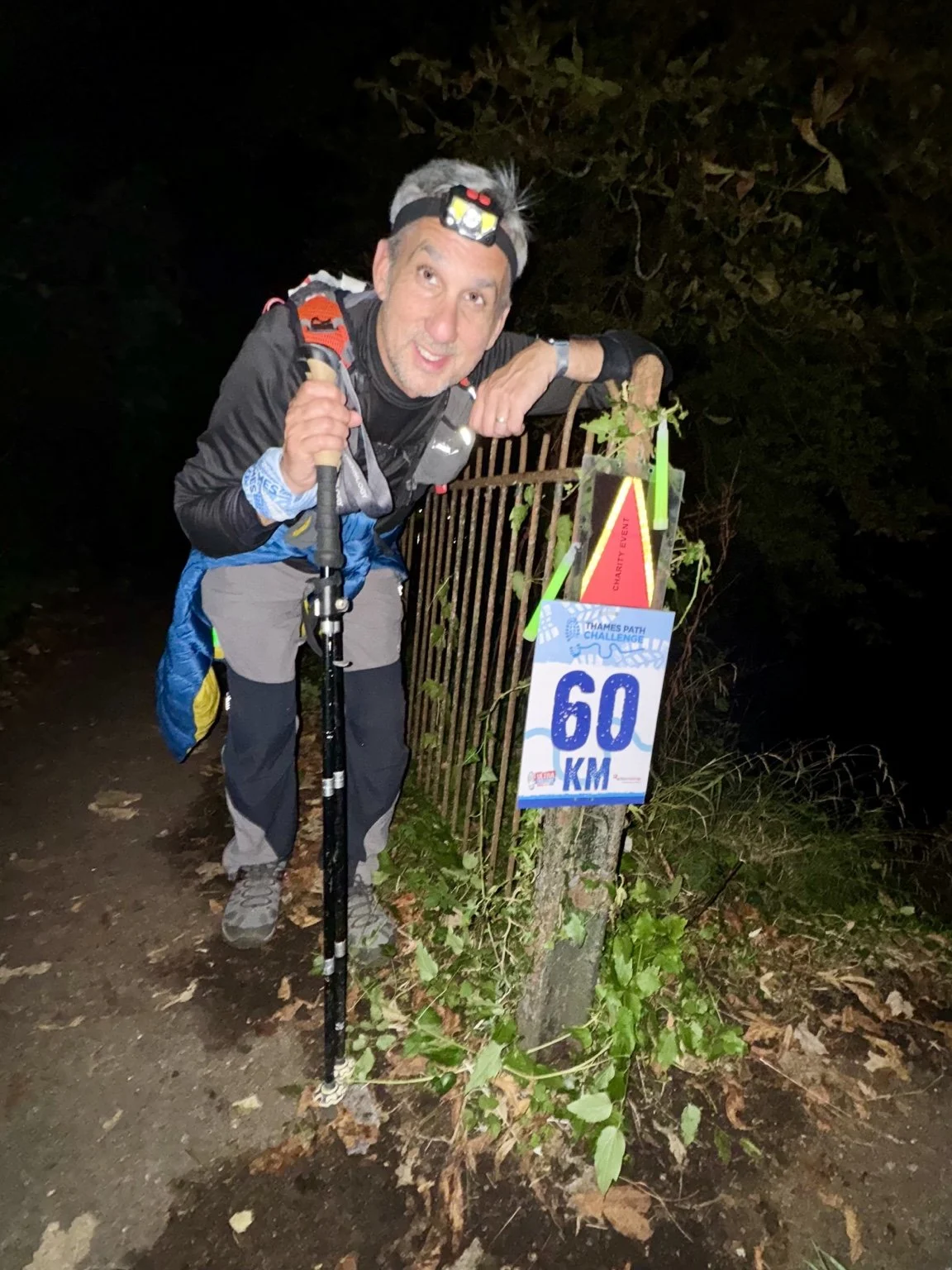
Standing next to that 60km marker on the Thames Path Challenge brought home just how much of 100km is mental. Thinking about another 40km isn't particularly helpful.
So don't.
BREAK THE CHALLENGE DOWN
Instead of thinking:
“I've still got 40km to walk.”
Think:
“I'm going to the next rest stop.”
Then the next one.
Then the next.
As the challenge gets harder, your world can become wonderfully simple: eat, drink, look after your feet and keep moving forward.
EXPECT LOW POINTS
Feeling terrible at 65km doesn't necessarily mean you'll feel terrible at 75km.
Food, a drink, dry clothing, sorting your feet or simply reaching the next checkpoint can completely change how you feel.
DON'T MAKE BIG DECISIONS IN A BAD MOMENT
Unless you're injured or there is a genuine reason to stop, don't automatically make the decision to quit because you're having a horrible half-hour.
Get to the next rest stop. Eat. Drink. Get warm. Then reassess.
REMEMBER WHY YOU'RE THERE
Whether you're raising money, taking on a personal challenge or simply trying to discover what you're capable of, there was a reason you signed up.
At 3am, it's worth remembering it.
DON'T WALK 100KM.
Walk to the next checkpoint.
Then do it again.
HOW FAST SHOULD YOU WALK 100KM?
At the start of a 100km challenge, you'll probably feel fantastic.
Fresh legs. Plenty of energy. Hundreds of other walkers around you.
And that's precisely when it's easiest to make a mistake.
100km rewards patience.
The pace that feels effortless at 10km can become very different at 70km, particularly once darkness, hills, tiredness and sore feet enter the equation.
START SLOWER THAN YOU THINK
Don't worry about people disappearing ahead of you during the first few hours.
Walk at a comfortable, sustainable pace and resist the temptation to chase other participants.
There is an enormous amount of walking still to come.
If you feel as though you're holding something back early on, that's probably a good thing.
YOUR PACE WILL CHANGE
Don't expect to maintain exactly the same speed for 100km.
You'll probably move faster over easy ground during daylight and slower on hills, technical terrain and during the night.
Rest stops will also reduce your overall average speed.
That's fine. The goal is forward progress, not perfectly even splits.
MANAGE YOUR REST STOPS
Over 100km, rest stops are essential — but the minutes can accumulate surprisingly quickly.
Use them properly: eat, refill your water, go to the toilet, check your feet and change clothing when necessary.
But once you've done what you need to do, get moving again.
Twenty unnecessary minutes at five different stops is an extra 1 hour 40 minutes on your total time.
THINK IN CHECKPOINTS, NOT SPEED
Later in the challenge, forget about miles per hour.
Your job becomes much simpler:
Get to the next checkpoint.
Eat. Drink. Sort yourself out.
Then head for the next one.
THE FIRST 25KM SHOULD FEEL EASY.
Don't use fresh legs to prove how quickly you can walk.
Save them for when you actually need them.
THE FINAL WEEK BEFORE YOUR 100KM CHALLENGE
By the final week, the training is done.
You're not going to gain any meaningful fitness by squeezing in one last huge walk. What you can do is arrive at the start with tired legs, sore feet or an unnecessary niggle.
Your priority now is recovery and preparation.
TAPER YOUR WALKING
Keep moving, but significantly reduce your mileage.
A few short, easy walks are fine. Avoid big hills, hard strength sessions or anything likely to leave you sore.
You should reach the start line feeling like you want to walk.
PRIORITISE SLEEP
Try to get some good nights of sleep during the week rather than obsessing about the night immediately before.
Pre-event nerves, an early start and the prospect of walking 100km aren't necessarily a recipe for eight blissful hours. 😄
Don't panic if you don't sleep brilliantly the night before.
CHECK THE WEATHER
Look at the forecast for the whole period you're likely to be outside, not simply the start.
Conditions can be very different the following night or morning.
Adjust your layers, waterproofs and drop-bag clothing accordingly.
READ THE EVENT GUIDE — AGAIN
Check start arrangements, rest-stop locations, mandatory kit, baggage arrangements, cut-off times, route information and what food and drink will be provided.
Don't discover an important detail while standing on the start line.
Then:
PACK YOUR BAGS BEFORE THE NIGHT BEFORE
I'd have three simple headings here rather than another big four-column section.
YOUR DAY PACK
Mandatory kit, waterproofs, water, familiar snacks, foot-care kit, phone, power bank, headtorch and anything you need between checkpoints.
YOUR HALFWAY / DROP BAG
Dry technical shirt, spare socks, fleece, Gore-Tex jacket, hat/gloves if appropriate, spare foot-care supplies, batteries/charging kit and any favourite food.
YOUR FINISH BAG
Dry clothes, comfortable footwear and warmer layers.
And then the bit I definitely think belongs on this page:
ON THE START LINE
The atmosphere will be buzzing. You'll feel rested. Your legs will feel fantastic.
Everyone will start walking.
Do not suddenly forget everything you've just spent 16–20 weeks learning.
Settle into your own pace. Eat and drink from the beginning. Look after your feet. Enjoy the daylight.
You have a very long way to go.
ARRIVE RESTED. START SLOWLY. EAT EARLY. KEEP MOVING.
The first few hours aren't where you complete a 100km challenge — but they can make the final few hours considerably harder.
100KM WALKING CHALLENGE FAQs
-
If you're already a regular walker with some long-distance experience, 16–20 weeks is a sensible training period.
If you're relatively new to long-distance walking, give yourself longer. Ideally, I'd also get some marathon or 50km experience before attempting 100km. There's a lot you learn about your feet, kit, fuelling and mindset by actually doing a long event.
-
No. You absolutely don't need to complete 100km before event day.
Your biggest training sessions should be about building endurance and time on your feet without exhausting yourself unnecessarily.
Long walks combined with substantial back-to-back weekends can prepare you for the challenge without attempting anything close to the full distance.
-
There's no magic distance, but I prefer building towards long walks of around 25–30 miles / 40–48km, combined with back-to-back training.
For example, a 25-mile Saturday followed by another 10–15 miles on Sunday can be more useful than trying to complete an enormous single training walk.
-
It varies enormously depending on terrain, elevation, weather, fitness and how long you spend at rest stops.
For many recreational walkers, 100km can take somewhere around 20–30+ hours. Some will be considerably quicker and others slower.
Always check your particular event's cut-off times rather than assuming every 100km challenge operates to the same schedule.
-
Yes, I'd strongly recommend doing some night walking.
If your event continues overnight, don't make the challenge itself your first experience of walking on trails by headtorch when you're already tired.
During your later training, let some long walks continue beyond sunset so you can test your headtorch, clothing and confidence in darkness.
-
Not necessarily.
If your footwear is working well, there's no reason you have to change it. But if your event provides access to a halfway bag, having a second pair of thoroughly tested shoes gives you another option.
Never put an untested pair on halfway through simply because they're fresh.
-
Check what your particular event allows, but useful items can include a dry technical shirt, clean socks, fleece, Gore-Tex jacket, hat and gloves, spare foot-care supplies, headtorch batteries or charging equipment and some favourite food.
Think about what you'll need as you move from daytime conditions into a potentially much colder night.
-
Start fuelling early and eat small amounts regularly throughout the event rather than waiting until you're hungry.
Use your long training walks to discover which foods your stomach tolerates after many hours of exercise. Mix sweet and savoury options and make use of the proper food available at rest stops where provided.
-
Firstly, don't be surprised if the thought crosses your mind.
A low point when you're cold, tired and walking in darkness can feel very different after you've eaten, warmed up, sorted your feet and reached another checkpoint.
If you're simply having a bad patch, get yourself to the next rest stop if you can, take some time, eat and drink, and reassess how you're feeling.
But if you're injured, unwell or decide that continuing isn't the right thing to do, don't feel you have to push on regardless.
On most organised challenges, if you need to withdraw, the best place to do so is at a rest stop or checkpoint. Tell one of the event team that you're stopping so they can record your withdrawal and arrange transport or collection where provided.
If you can't safely reach the next rest stop, contact the event organiser using the emergency number provided in your event instructions rather than simply leaving the route.
Always follow the withdrawal procedure for your particular event.
-
A 100km walk places significant demands on your body, which is why proper training and preparation matter.
Follow the event organiser's safety guidance and mandatory kit requirements, pay attention to weather conditions and don't ignore injury or illness simply because you're determined to finish.
Knowing when something is more than ordinary tiredness is part of looking after yourself.
READY TO TAKE ON 100KM?
100km is a huge walking challenge. Don't underestimate it — but don't assume it's beyond you either.
Give yourself enough time to train. Build your endurance gradually. Practise walking on tired legs and in the dark. Learn what your feet need, what your stomach will tolerate and which kit works for you.
Then when the day comes, respect the distance and take it one checkpoint at a time.
You don't need to think about walking 100km.
You just need to keep moving forward.
100km. 62 miles. One hell of a long walk — and one hell of a feeling when you finish.