

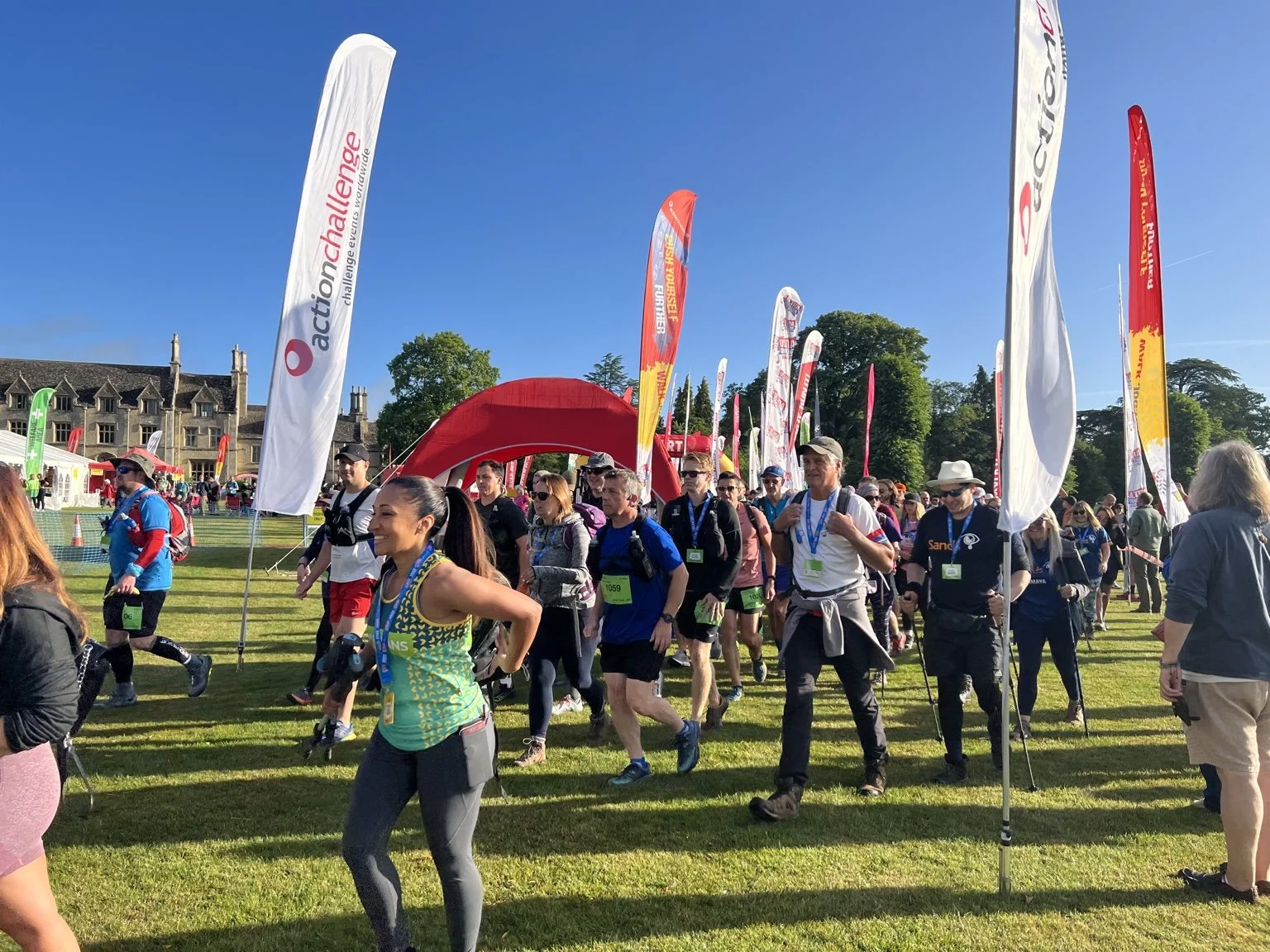
LONG-DISTANCE WALKING
CHALLENGE TRAINING
Training for a marathon walk, 50km or 100km challenge? You're in the right place
READY TO TAKE ON A BIG WALKING CHALLENGE?
Whether you’ve signed up for your first marathon walk, a 50km challenge or the full 100km, the right training can make the difference between simply surviving the day and actually enjoying it.
You don’t need to be an ultra-runner or an elite athlete. Long-distance walking is about building endurance gradually, getting your kit right, learning how to fuel and hydrate, and — perhaps most importantly — spending enough time on your feet.
I’ve completed and supported long-distance walking challenges over many years, from marathon-distance events to 50km and 100km ultras. This hub brings together what I’ve learned along the way.
Choose your challenge distance to get started.
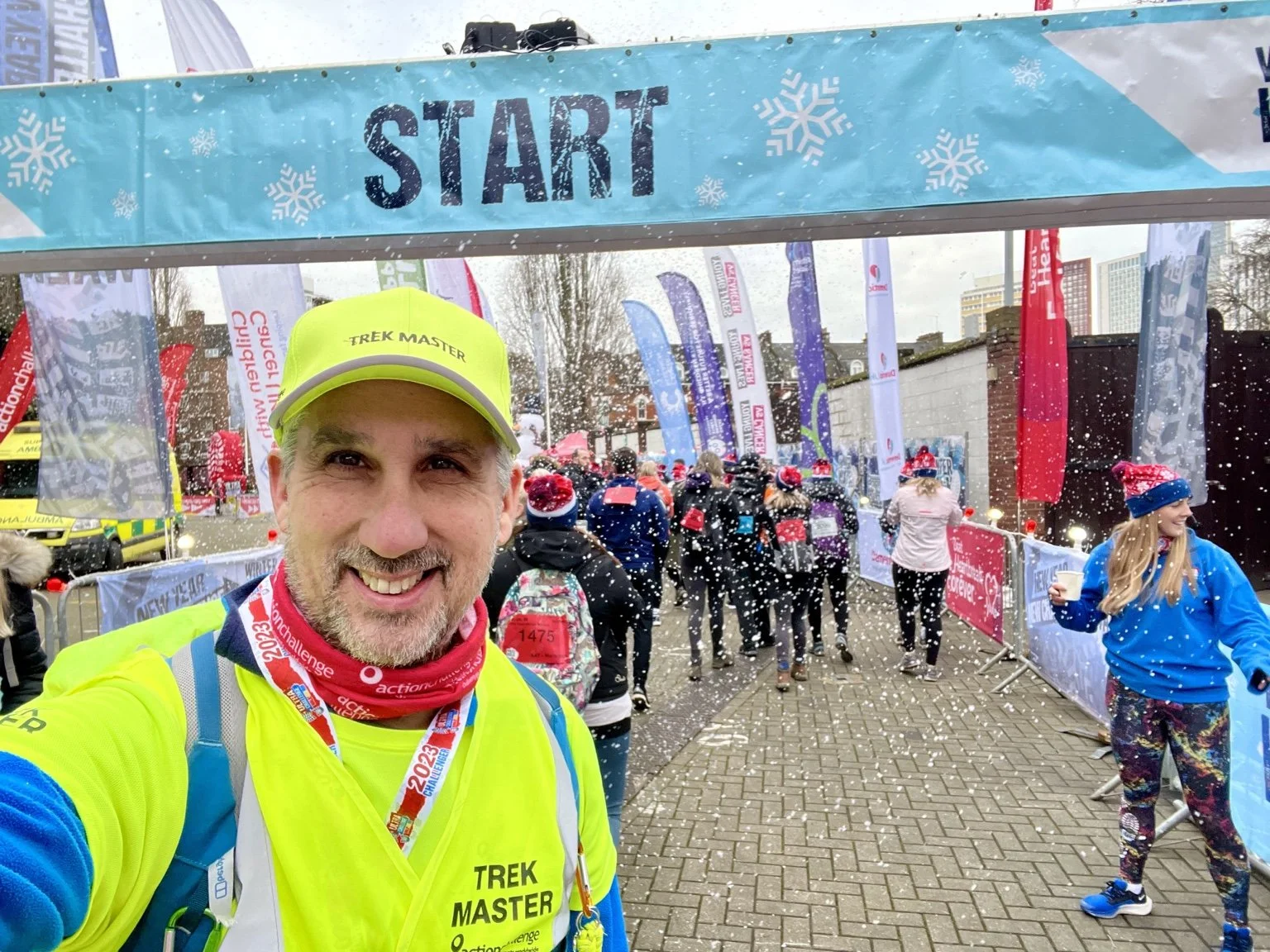
MARATHON-DISTANCE WALK
26.2 miles / 42km
Build the endurance to comfortably tackle your first marathon-distance walk.
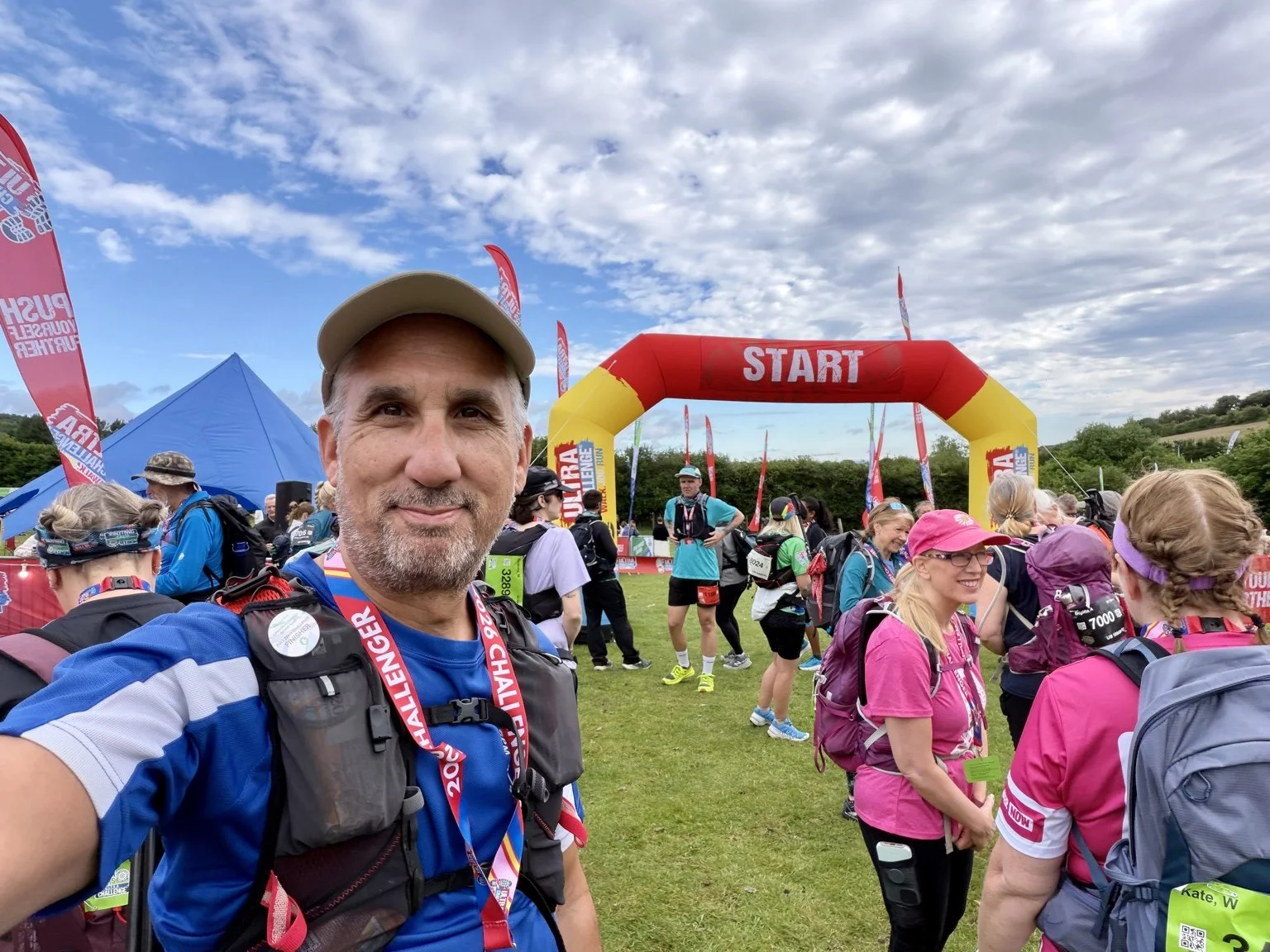
50KM CHALLENGE
31 miles / 50km
Step up to ultra distance with a training plan built around time on your feet.
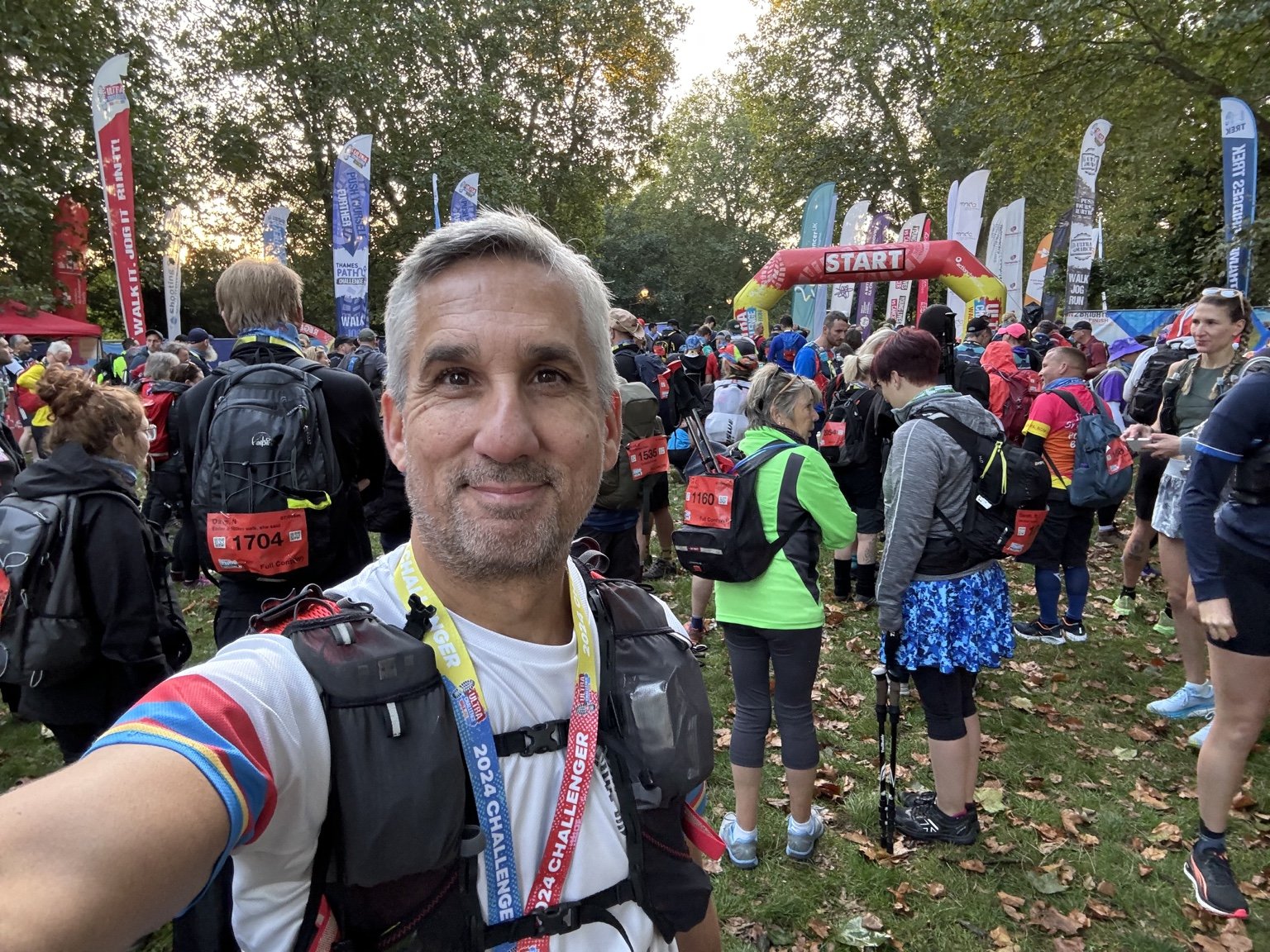
100KM ULTRA
62 miles / 100km
Prepare for the big one — endurance, pacing, nutrition, kit and the mental side of going long.
HOW TO TRAIN FOR A LONG-DISTANCE WALKING CHALLENGE
The biggest mistake is thinking you need to walk the full event distance in training. You don’t.
Whether you’re preparing for 26.2 miles, 50km or 100km, the principle is the same: gradually build the amount of time you spend on your feet and teach your body to keep moving when it’s tired.
Your training should combine regular shorter walks with progressively longer weekend walks. As the event gets closer, back-to-back walking days become particularly useful — especially for 50km and 100km challenges.
The aim isn’t speed. It’s building the endurance, strength and confidence to keep going comfortably for hour after hour.
BUILD GRADUALLY
Increase your longer walks over time rather than jumping straight into huge distances. Consistency matters more than one monster training walk.
TIME ON YOUR FEET
Long-distance walking is as much about duration as mileage. Your feet, legs and joints need to become accustomed to being active for hours at a time.
TRAIN WITH YOUR KIT
Use your event-day shoes, socks, backpack and clothing on your longer walks. Nothing important should be making its debut on event day.
PRACTISE FUEL & HYDRATION
Learn what you can comfortably eat and drink while walking. Your longer training walks are where you find out what works — and what definitely doesn’t.
HOW LONG SHOULD YOU TRAIN FOR A WALKING CHALLENGE?
8–12 WEEKS
Marathon-distance walk
For someone already reasonably active
12–16 WEEKS
50km challenge
Depending on your starting fitness and walking experience.
16–20 WEEKS
100km ultra
To progressively build endurance and practise long back-to-back days.
These aren't rigid rules. If you're starting from very little regular exercise, give yourself longer. If you're already walking substantial distances every week, you may need less. The important thing is to build gradually rather than trying to cram your training into the final few weeks.
WHAT SHOULD A TYPICAL TRAINING WEEK LOOK LIKE?
You don’t need to spend every day walking huge distances. A good training week combines walking, strength work, recovery and one progressively longer walk.
2–3 SHORTER WALKS
Regular walking during the week builds your overall mileage and keeps your legs accustomed to moving.
1 LONG WALK
Your key session. Gradually increase the distance or time on your feet as your challenge approaches.
1–2 STRENGTH SESSIONS
Focus on your legs, glutes and core. Stronger muscles will help when fatigue sets in — particularly on hills.
REST & RECOVERY
Training only works if you recover from it. Build easier days into your week and listen when your body is telling you to back off.
For a 50km or 100km challenge, some weekends should eventually include back-to-back walks — a longer walk one day followed by another walk the next.
WHAT SHOULD YOU EAT AND DRINK ON A LONG-DISTANCE WALK?
You can have the best training plan in the world, but if you don’t fuel properly, a long walking challenge can unravel surprisingly quickly.
The key is to eat and drink little and often, rather than waiting until you’re hungry, thirsty or running out of energy. And just like your shoes and kit, your nutrition strategy should be tested during training — not invented on event day.
START FUELLED
Eat a familiar breakfast before you start, with plenty of carbohydrate and nothing your stomach hasn’t dealt with before.
EAT REGULARLY
On longer challenges, take on small amounts of food regularly. Mix easy-to-eat carbohydrates with some savoury options as the hours build up.
DRINK LITTLE & OFTEN
Sip regularly rather than drinking huge amounts at once. In warmer conditions or over very long distances, electrolytes can also be useful.
USE YOUR TRAINING WALKS
Find out what your stomach tolerates while you’re moving. What sounds delicious sitting at home can be a very different proposition after eight hours on your feet.
MAKE USE OF THE REST STOPS
On organised walking challenges, rest stops along the route will usually give you opportunities to refill your water bottles and refuel. Depending on the event, food and snacks may also be provided.
That means you generally don’t need to carry everything you’ll eat and drink for the entire day. I normally carry a few light snacks such as energy or protein bars and fruit, then make use of the rest stops along the way.
Always check your event guide before the day, though. Find out where the rest stops are, what food and drink will be available and how far you’ll need to walk between them.
The longer the challenge, the more important your fuelling strategy becomes. For a 100km walk, eating and drinking well is every bit as much a part of the challenge as walking.
WHAT KIT DO YOU NEED FOR A LONG-DISTANCE WALKING CHALLENGE?
You don’t need mountains of specialist equipment for a walking challenge, but the kit you choose can make a huge difference once you’ve been on your feet for several hours.
The golden rule is simple: nothing new on event day. Shoes, socks, backpack and clothing should all have been tested on your longer training walks.
GET YOUR FOOTWEAR RIGHT
Comfort matters more than anything else. Choose walking shoes, trail shoes or lightweight boots that suit the terrain and that you’ve already worn over substantial distances.
DON'T IGNORE YOUR SOCKS
Good walking socks can make an enormous difference. Test different combinations during training and carry a spare pair on longer challenges — changing into dry socks can feel ridiculously good after hours of walking.
KEEP YOUR PACK LIGHT
Carry what you need, but don’t take half the house with you. Water, a few snacks, waterproofs, basic first aid, phone and any mandatory event kit should cover most supported challenges.
PREPARE FOR THE WEATHER
Conditions can change considerably during a long event. Check the forecast and carry lightweight layers, sun protection or waterproofs as appropriate.
CHECK THE EVENT KIT LIST
Always read the organiser’s event guide before packing. Some challenges have mandatory kit requirements, and what's provided at rest stops varies between events.
Whatever you choose to wear or carry, test it on your longest training walks first. A minor irritation at 5km can become a major problem at 50km.
USE THE BAG DROP
Longer organised challenges may offer a bag-drop service at registration, sometimes with access to your bag at a halfway point as well as at the finish.
If your event offers this, use it. For a 100km challenge, having fresh clothes and socks available around halfway can make a huge difference before heading out for the second half. It's also worth packing something warm, dry and comfortable to change into at the finish.
Check your event guide beforehand to see whether bag drop is available, where you'll be able to access your bag and any restrictions on bag size or contents.
After 50km — and definitely after 100km — pulling on a clean, dry top can feel like one of life's great luxuries.
LOOK AFTER YOUR FEET
On a long-distance walking challenge, your feet are often the first thing to complain. A small hot spot or rubbing that seems insignificant early on can become extremely painful after another 20, 30 or 50km.
The trick is to deal with problems early rather than hoping they'll disappear. They generally won't.
BREAK IN YOUR FOOTWEAR
Never start a challenge in new shoes or boots. Your longest training walks should be done in the footwear and socks you intend to use on event day.
DEAL WITH HOT SPOTS EARLY
If you feel rubbing or irritation developing, stop and deal with it. Tape or a blister dressing applied early can prevent a small problem becoming a very painful one.
KEEP YOUR FEET DRY
Wet feet are more prone to rubbing and blisters. Carry spare socks on longer events and consider changing them at a rest stop or halfway point.
PACK A SMALL FOOT-CARE KIT
Blister plasters or dressings, tape and anything you've successfully used during training are worth carrying. Keep it small — you don't need your own mobile pharmacy.
DON'T WAIT UNTIL IT HURTS
One of the best habits you can develop during training is recognising when something doesn't feel right and dealing with it immediately.
Stopping for five minutes to sort out your feet can save you hours of misery later.
Make use of the event support teams too. Larger organised challenges often have medical or welfare support at rest stops. If you're struggling with a blister, injury or anything that concerns you, ask for help rather than trying to soldier on.
HOW SHOULD YOU PACE A LONG-DISTANCE WALK?
One of the easiest mistakes to make is starting too quickly.
At the beginning of an event you’re fresh, excited and surrounded by hundreds of other walkers. It’s incredibly easy to get swept along at someone else’s pace. The problem is that a pace which feels effortless at 5km can feel very different at 35km — never mind 75km.
Start slower than you think you need to. The aim is to find a comfortable, sustainable rhythm that you can maintain for hour after hour.
WALK YOUR OWN WALK
Don’t worry about people overtaking you early on. Some will be faster, some slower. Find the pace that works for you and stick with it.
DON’T RACE THE FIRST HALF
Save something for later. If you reach halfway feeling as though you could have gone faster, that’s usually a much better position than arriving there exhausted.
KEEP REST STOPS SENSIBLE
Use them to refill water, eat, sort your feet and take a breather — but be careful about stopping for too long. Getting moving again can become increasingly difficult as the day goes on.
EXPECT YOUR PACE TO CHANGE
Hills, terrain, weather and fatigue will all affect your speed. Don’t become obsessed with maintaining a particular pace or finishing time.
BREAK THE DISTANCE DOWN
Don’t spend the whole day thinking about how many kilometres you still have left.
Focus on reaching the next rest stop, checkpoint or manageable milestone. On a 100km challenge in particular, thinking “I’ve still got 70km to go” isn't terribly helpful. Thinking “just get to the next stop” is much easier to deal with.
Your best pace is the one that gets you to the finish — not the one that gets you to the first rest stop fastest.
THE MENTAL SIDE OF LONG-DISTANCE WALKING
Training prepares your body, but on a long-distance challenge there will probably come a point when your head starts questioning the whole idea.
Tiredness, darkness, bad weather, sore feet or simply knowing you still have hours of walking ahead can all make things feel much harder. This is particularly true on 50km and 100km events, where mental resilience becomes just as important as physical fitness.
The good news? You can train for this too.
EXPECT TO HAVE LOW POINTS
A bad hour doesn’t mean you’re having a bad event. Energy and mood can change surprisingly quickly after some food, a rest stop or simply reaching the next milestone.
BREAK IT DOWN
Don’t think about the entire distance. Concentrate on the next checkpoint, the next 5km or even the next hill. Keep giving yourself achievable targets.
REMEMBER YOUR WHY
Whether you’re raising money for a charity, taking on a personal challenge or simply proving to yourself that you can do it, remember why you signed up in the first place.
WALK WITH OTHERS
Conversation can make kilometres disappear. If you’re walking with friends, support each other through the inevitable difficult patches. If you’re on your own, you’ll often find yourself chatting to other walkers along the route.
AND FOR 100KM... PREPARE FOR THE NIGHT
If your 100km challenge continues through the night, practise walking in the dark before event day. Walking by headtorch when you’re already tired feels very different from an afternoon training walk.
Test your headtorch and clothing, get comfortable navigating trails in darkness and experience what it feels like to keep walking when your body would normally be thinking about bed.
Sometimes the hardest part of a long-distance challenge isn’t another 10km. It’s convincing yourself to leave the rest stop and start walking again.
WHAT I’VE LEARNED FROM GOING THE DISTANCE
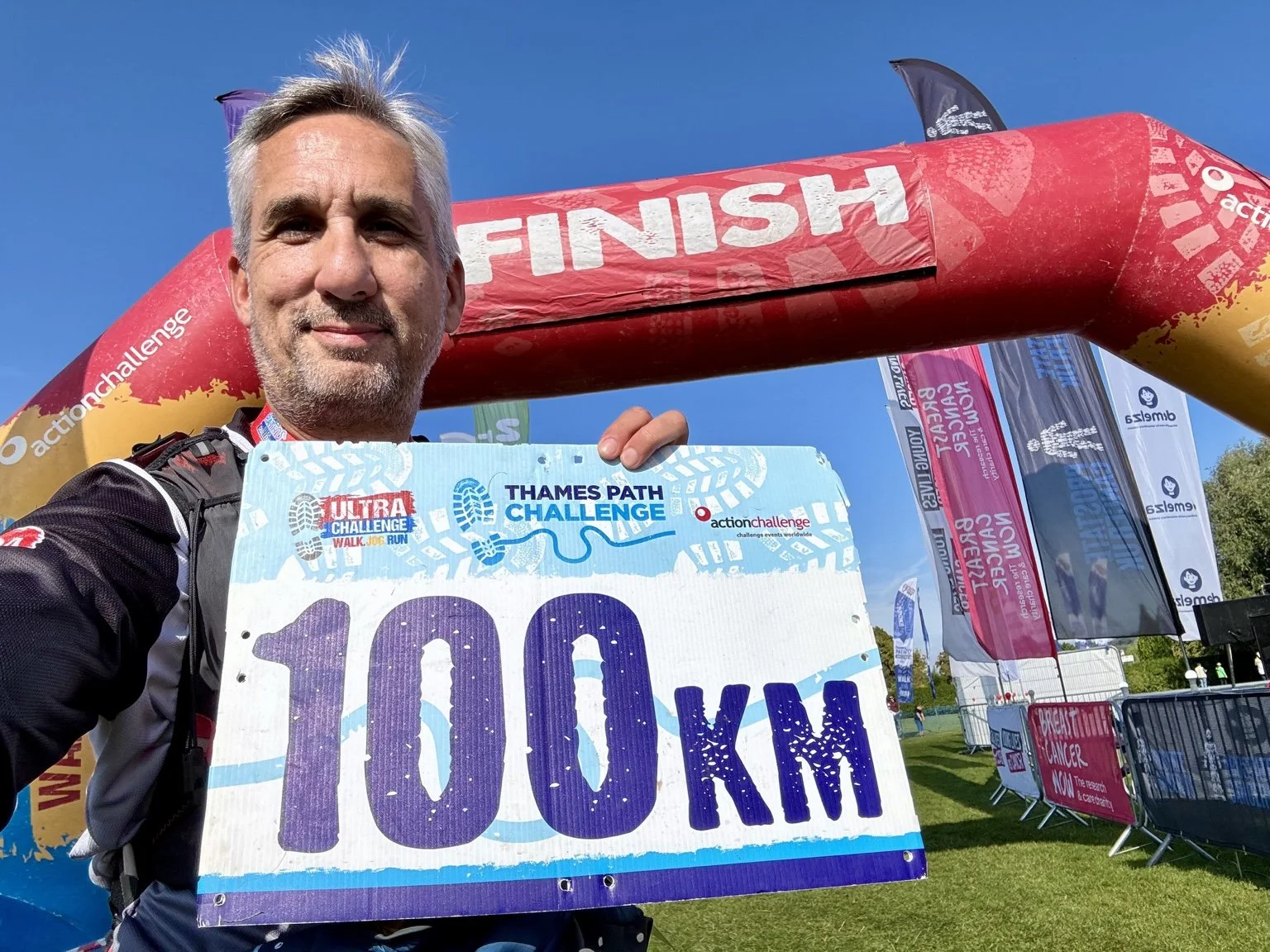
I’ve been taking on long-distance walking challenges for years — from marathon-distance events and 50km walks through to the full 100km.
Some have gone brilliantly. Some have been considerably tougher than expected. And I’ve had challenges where I haven’t made it to the finish.
That’s taught me something important: there’s a lot more to long-distance walking than simply being fit enough to walk a long way.
Training matters, but so do your feet, your kit, what you eat, how you pace yourself and what’s going on in your head when things get difficult.
Most of the advice in this hub comes from lessons I’ve learned while actually doing these events — including a few things I’d definitely do differently next time.
And perhaps the biggest lesson? Respect the distance, prepare properly — but enjoy it. These events can be hard, but they can also be some of the most rewarding days you’ll spend on two feet.
LONG-DISTANCE WALKING CHALLENGE FAQs
-
No. In fact, for a 50km or 100km challenge, trying to complete the full distance beforehand can do more harm than good.
The aim of training is to gradually build endurance and get your body used to spending long periods on your feet. Your longest training walks should give you confidence without leaving you needing days to recover.
For longer challenges, back-to-back walking days can also be useful — teaching you to walk again on tired legs without needing to cover the full event distance in one go.
-
There’s no single distance that works for everyone, but you don’t need to match the distance of the event.
For a marathon-distance walk, building towards around 20–22 miles can give you a good foundation. For 50km and particularly 100km events, time on your feet becomes just as important as mileage.
The key is to build gradually. One enormous training walk won’t compensate for weeks of inconsistent training.
-
Eat and drink little and often rather than waiting until you’re hungry or thirsty.
Most organised challenge events have regular rest stops where you can refill water bottles and pick up food and snacks, so you usually don’t need to carry everything for the entire day. Carry some light snacks you know work for you — such as energy or protein bars, fruit or other easy-to-eat foods.
Check your event guide beforehand so you know what will be available and where the rest stops are. Most importantly, practise your fuelling strategy during training rather than trying something new on event day.
-
Keep it as light as you reasonably can. Water, a few snacks, waterproofs, an extra layer, blister treatment, any personal medication, your phone and a small power bank will cover many of the essentials.
Your event organiser should provide a mandatory or recommended kit list, so always check that before deciding what to take.
On some 50km and 100km events there may also be a bag-drop service, allowing you to send spare clothing or other items ahead to a halfway point or the finish. A clean, dry change of clothes waiting for you can feel surprisingly luxurious after a very long day!
-
Start with footwear and socks that you’ve already tested over long distances. Event day is absolutely not the time to discover whether your new shoes are comfortable after six hours.
Pay attention to hot spots while you’re walking. If something starts rubbing, deal with it early rather than hoping it will disappear. Carry blister plasters or your preferred treatment and consider taking spare socks, particularly on longer or wet events.
Looking after your feet is one of the most important parts of completing a long-distance challenge.
-
Use them — but don’t accidentally move in! 😂
Rest stops are your chance to refill water, eat, use the toilets, adjust clothing and kit, and deal with any problems with your feet before they become bigger problems.
On longer events it can be very tempting to sit down for a long time, particularly later in the challenge. A short, purposeful stop is usually better. Get what you need, sort yourself out and get moving again before your legs become too comfortable with the idea of stopping.
Still deciding which distance is right for you?
Choose one of the training guides below and start building towards your challenge.
READY TO START TRAINING?
Choose your challenge and start building towards the distance.