

HOW TO TRAIN FOR A
MARATHON WALK
An 8–12 week training guide to help you walk 26.2 miles / 42km — and enjoy the finish
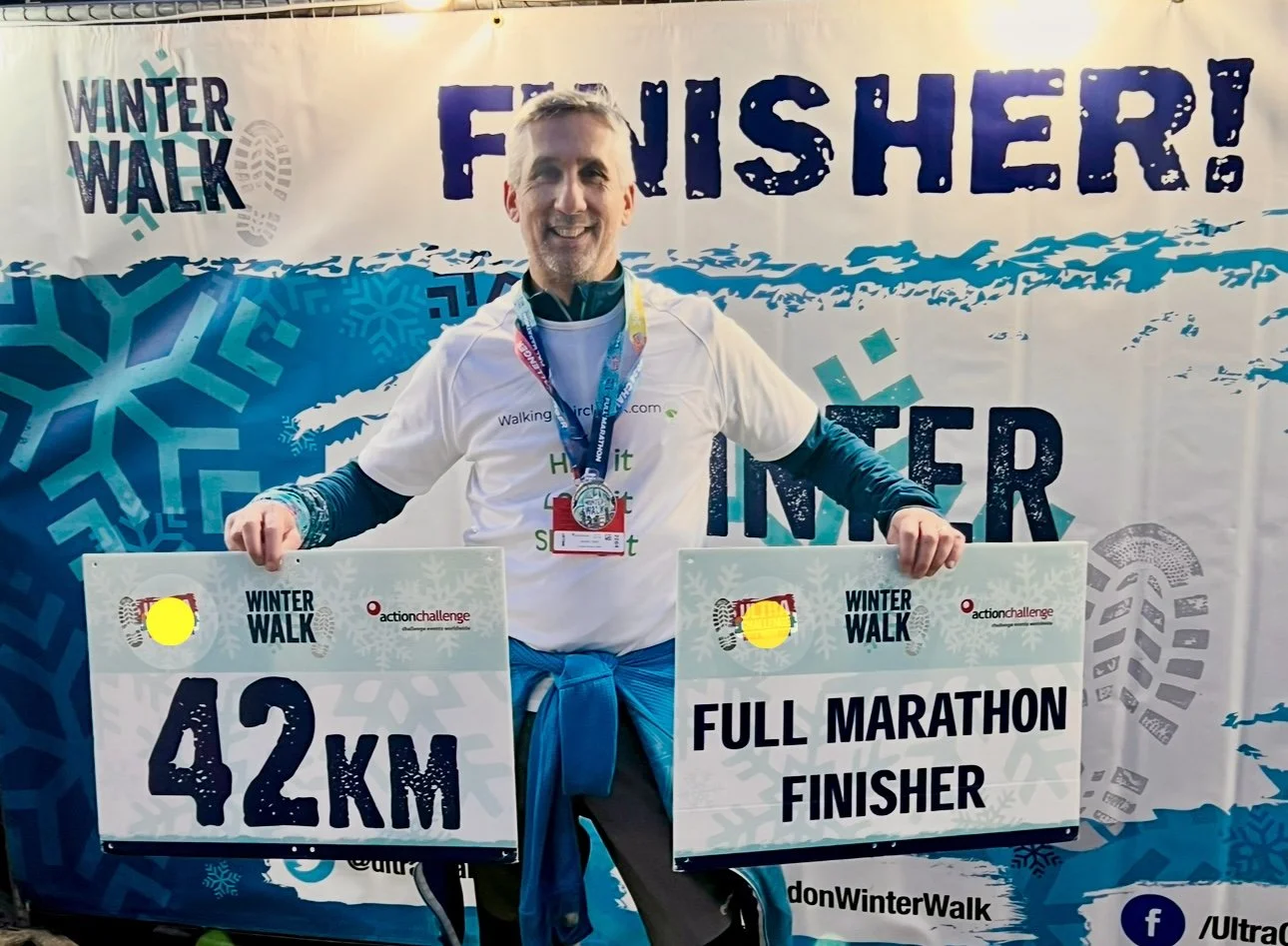
CAN YOU REALLY TRAIN FOR A MARATHON WALK IN 8–12 WEEKS?
For most reasonably active people, yes.
You don’t need to be able to walk anywhere close to 26.2 miles when you start training. The aim over the next 8–12 weeks is to gradually increase the amount of time you spend on your feet, while getting your legs, feet and body used to walking for several hours at a time.
If you already walk regularly and can comfortably manage around 6–8 miles, an 8–12 week plan should give you plenty of time to build towards marathon distance.
If you’re starting from very little regular exercise, give yourself longer. There’s no prize for squeezing your preparation into eight weeks — arriving at the start line fit, healthy and confident is far more important.
And no — you don’t need to walk a marathon in training before event day.
STARTING POINT
Comfortably walking around 6–8 miles
TRAINING TIME
Around 8–12 weeks
LONGEST TRAINING WALK
Around 18–20 miles
YOUR 8–12 WEEK MARATHON WALK TRAINING PLAN
The goal isn’t to walk 26.2 miles before event day. It’s to gradually build your endurance, strengthen your legs and get your body used to spending longer periods on your feet.
This plan assumes you can already comfortably walk around 6–8 miles. If you’re starting from a lower base, spend a few extra weeks building up before beginning.
WEEKS 1–3
Build the habit
Keep your weekday walks relatively short and gradually increase your weekend distance.
Long walk: 6–10 miles
Focus: Comfortable pace, footwear and consistency
WEEKS 4–6
Build endurance
Your weekend walks become longer. Start paying more attention to what you eat and drink and use the kit you intend to carry on event day.
Long walk: 10–14 miles
Focus: Time on your feet, kit, food and hydration
WEEKS 7–9
Peak training
This is where your longest walks happen. Include an 18–20 mile walk if you're comfortable doing so. You can also introduce occasional back-to-back walking days rather than making every session longer.
Long walk: 14–20 miles
Focus: Endurance, pacing and tired legs
WEEKS 10–12
Taper & prepare
You've done the hard work. Reduce the distance rather than trying to squeeze in one last monster walk. Keep moving, but arrive at the start line with fresh legs.
Long walk: Gradually reduce
Focus: Recovery, preparation and confidence
If you're following an 8-week rather than 12-week schedule, don't simply cram 12 weeks of training into eight. Start at the stage that best reflects your current walking fitness and build gradually.
Your longest training walk does not need to be 26.2 miles. For most walkers, reaching around 18–20 miles in training is plenty.
WHAT SHOULD A TYPICAL TRAINING WEEK LOOK LIKE?
You don’t need to spend every spare hour walking. For most people, three or four purposeful sessions a week is enough, with the weekend long walk doing most of the heavy lifting.
A typical week might look something like this:
MONDAY
Rest / recovery
TUESDAY
3–5 mile brisk walk
WEDNESDAY
Strength training or rest
THURSDAY
3–5 mile walk, ideally including some hills
FRIDAY
Rest
SATURDAY
Long training walk
Build the distance gradually
SUNDAY
Easy recovery walk or rest
DON'T WORRY IF YOUR WEEK DOESN'T LOOK LIKE THIS
Work, family, weather and life in general will get in the way sometimes. That's fine. What matters is consistency over several weeks, not completing every session perfectly.
Your long walk is the most important session. That's where you'll build endurance and learn what happens to your feet, legs, kit, appetite and energy levels after several hours of walking.
You don't need to walk quickly. Most of your training should be at a comfortable, sustainable pace. As your longer walks increase, think more about time on your feet than speed.
STRENGTH TRAINING FOR A MARATHON WALK
Walking should make up the bulk of your training, but a little strength work can make a big difference — particularly as the miles start to build.
Stronger legs, glutes and core can help you maintain good walking form when you're tired and cope better with hills, uneven ground and hour after hour on your feet.
You don't need to spend hours in the gym. One or two short strength sessions a week alongside your walking is plenty.
SQUATS
Build strength through your quads, glutes and hips.
STEP-UPS
Great preparation for hills and strengthening each leg individually.
CALF RAISES
Help strengthen your calves and prepare your lower legs for thousands of repeated steps.
CORE WORK
Planks and similar exercises help with posture and stability, particularly when carrying a backpack.
DON'T FORGET THE DOWNHILLS
If your event has significant hills, train for coming down them as well as going up. Long descents can be surprisingly tough on your quads and knees, particularly later in an event.
Whenever possible, include some hilly routes in your longer training walks rather than doing all your mileage on flat ground.
Strength work should complement your walking, not leave your legs so sore that you can't do your important training sessions. Build it up gradually.
FEET, BLISTERS & FOOTWEAR
On a marathon walk, your fitness might be fine while your feet are screaming at you to stop. Looking after them starts during training — not when the first blister appears on event day.
Your longer training walks are where you should work out which shoes, socks and foot-care routine work for you. Anything that starts rubbing after six miles can become a very different problem after 20.
WEAR TESTED FOOTWEAR
Never save new shoes or boots for event day. Put plenty of miles into them first and make sure they're comfortable on genuinely long walks.
GET YOUR SOCKS RIGHT
Good walking socks matter. Test different combinations during training and carry a spare pair on event day — changing into dry socks can feel surprisingly good after several hours.
DEAL WITH HOTSPOTS EARLY
If you feel rubbing or a hotspot developing, stop and deal with it. Tape, blister plasters or whatever you've found works for you in training can prevent a small irritation becoming a walk-ending problem.
KEEP YOUR FEET AS DRY AS POSSIBLE
Rain, sweat and wet ground can soften the skin and increase the chance of blisters. Spare socks and a small foot-care kit are worth carrying.
SHOES OR WALKING BOOTS?
For most marathon-distance walking events, comfortable trail shoes, walking shoes or lightweight boots can all work. There's no single right answer.
What matters is the terrain, weather and — above all — what you've trained in. A lightweight shoe you've comfortably walked 18 miles in is a much better choice than a brand-new pair of expensive walking boots.
MY RULE: NOTHING NEW ON EVENT DAY
Shoes, socks, insoles, backpack — even clothing. Your longer training walks are your dress rehearsals. If you're going to use it for 26.2 miles, test it first.
HOW FAST SHOULD YOU WALK A MARATHON?
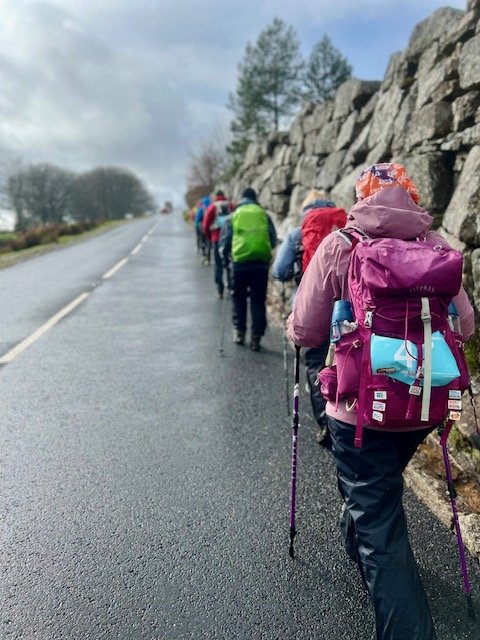
One of the easiest mistakes to make is starting too quickly. With fresh legs, a crowd around you and the excitement of event day, your normal walking pace can suddenly feel ridiculously easy.
But 26.2 miles is a long way. The aim is to find a pace you can maintain comfortably for hour after hour, rather than banking fast miles at the beginning and paying for them later.
WHAT'S A GOOD WALKING PACE?
For many walkers, somewhere around 3–4 mph (5–6.5 km/h) is a reasonable moving pace, but there’s no magic number.
Terrain, hills, weather, rest stops and your own fitness will all make a difference. Use your longer training walks to discover the pace that feels sustainable for you.
DON'T FORGET THE STOPS
Your average speed on an event will almost certainly be slower than your walking speed.
Rest stops are there for a reason — to refill water, grab food, use the toilets and sort out your feet or kit. But 20 minutes here and 15 minutes there can quickly add up.
Take the breaks you need, but don't automatically settle into a chair for half an hour at every stop. 😄
PRACTISE YOUR EVENT-DAY PACE
During your longer training walks, practise walking at roughly the effort you intend to use on event day. You should feel like you're holding something back during the early miles.
START SLOWER THAN YOU THINK
If the first few miles feel almost too easy, that's probably a good thing.
There will be plenty of opportunity to increase your pace later if you're feeling strong. It's considerably harder to recover from going too fast at the beginning.
WHAT SHOULD YOU EAT AND DRINK ON A MARATHON WALK?
Walking 26.2 miles takes a lot of energy, but that doesn't mean you need to carry a day's worth of food on your back.
On most organised walking challenges, there will be rest stops along the route where you can refill water bottles and pick up food and snacks. Check your event guide beforehand so you know what's provided, where the stops are and how far apart they are.
START FUELLED
Eat a familiar breakfast before you start, with plenty of carbohydrate. Event morning isn't the time to experiment with something your stomach hasn't met before.
CARRY A FEW FAVOURITES
Take a few lightweight snacks you know work for you — energy or protein bars, fruit, sweets or something savoury. You shouldn't need to carry everything you'll eat if your event has well-stocked rest stops.
EAT BEFORE YOU'RE HUNGRY
Take on small amounts regularly rather than waiting until you're running low on energy. Use your training walks to discover what you can comfortably eat while walking.
DRINK LITTLE & OFTEN
Sip regularly and refill your bottles at the rest stops. In warmer conditions, or if you're sweating heavily, an electrolyte drink can be useful too.
CHECK YOUR EVENT GUIDE
Don't assume every event provides the same thing.
Before event day, check:
where the rest stops are;
what food and drink will be available;
whether you need to carry a minimum amount of water;
whether there are any mandatory kit requirements.
That lets you carry what you actually need rather than hauling unnecessary weight for 26 miles.
After several hours of sweet snacks, something savoury can be absolute heaven. Use your longer training walks to find out what you actually fancy eating when you're tired — it may be very different from what you'd choose sitting at home.
WHAT KIT DO YOU NEED FOR A MARATHON WALK?
For a supported marathon walking event, you generally don't need to carry everything but the kitchen sink. The aim is to have what you genuinely need without carrying unnecessary weight for 26.2 miles.
Always check the event organiser's kit list first. Requirements vary, and weather conditions can change what you'll need on the day.
ON YOUR FEET
Wear the shoes or boots and socks you've tested on your longest training walks.
Carry a spare pair of socks too. Dry socks can make a remarkable difference later in the day.
IN YOUR BACKPACK
Keep it relatively light: water, a few snacks, phone, power bank, basic first aid/foot-care items and any personal essentials.
Your event may specify additional mandatory kit.
PREPARE FOR THE WEATHER
Carry suitable layers and a waterproof jacket, even if the forecast looks reasonable.
Sun cream and a hat can be just as important on a hot day.
SMALL THINGS THAT MATTER
Blister plasters or tape, tissues, hand sanitiser and any medication you need take up very little room but can become extremely useful several hours into a walk.
CHECK WHETHER THERE'S A BAG DROP
Some organised events — particularly longer 50km and 100km challenges — offer a bag-drop service at registration.
This can allow you to leave spare clothing and other items that you don't want to carry all day. On some 100km events, you may also be able to access a bag around the halfway point — particularly useful if you're continuing overnight or want to change into dry clothes.
Even on a marathon-distance event, having clean, dry clothes and different footwear waiting at the finish can feel ridiculously good.
Check your event guide before packing, as bag-drop arrangements, locations and restrictions vary between events.
DON'T OVERPACK
I'd finish with this:
Every extra item has to travel 26.2 miles with you.
Your training walks are the perfect opportunity to refine what you carry. If something has spent three long walks sitting untouched at the bottom of your backpack, ask yourself whether you really need it.
THE FINAL WEEK BEFORE YOUR MARATHON WALK
By now, the hard work is done. You won't gain any meaningful fitness by squeezing in another huge walk during the final few days, but you can certainly arrive at the start line tired if you overdo it.
Keep walking, but reduce the distance and intensity. The priority now is to recover, get organised and arrive with fresh legs.
EASE BACK
Keep your legs moving with a few easy walks, but no last-minute epic distances. Trust the training you've already done.
CHECK YOUR KIT
Shoes, socks, backpack, waterproofs, water bottles, foot-care kit and anything required by the organiser. Nothing new on event day.
CHECK THE EVENT GUIDE
Confirm your start time and location, parking or transport, registration arrangements, rest stops, route information, bag drop and mandatory kit.
GET SOME SLEEP
Aim for decent sleep throughout the week rather than worrying if nerves affect you the night before. Get everything ready early so you're not hunting for safety pins at 5am.
ON THE MORNING
Have the breakfast you've already tested in training, give yourself plenty of time to get to the event and start hydrating normally.
Arrive early enough to register, drop off any bag, use the toilet and sort yourself out without rushing.
WHEN THE WALK STARTS...
Don't get carried away.
The adrenaline kicks in, everyone starts moving and it's remarkably easy to find yourself walking faster than you intended.
Let people go.
Your marathon doesn't really begin in the first few miles. The important bit is how you're feeling after 15, 18 and 20 miles.
Start comfortably, eat and drink regularly, use the rest stops and deal with any foot problems as soon as you notice them.
You've trained for this. Now the job is to keep moving forward and enjoy the day.
WHEN IT GETS TOUGH: THE MENTAL SIDE OF A MARATHON WALK
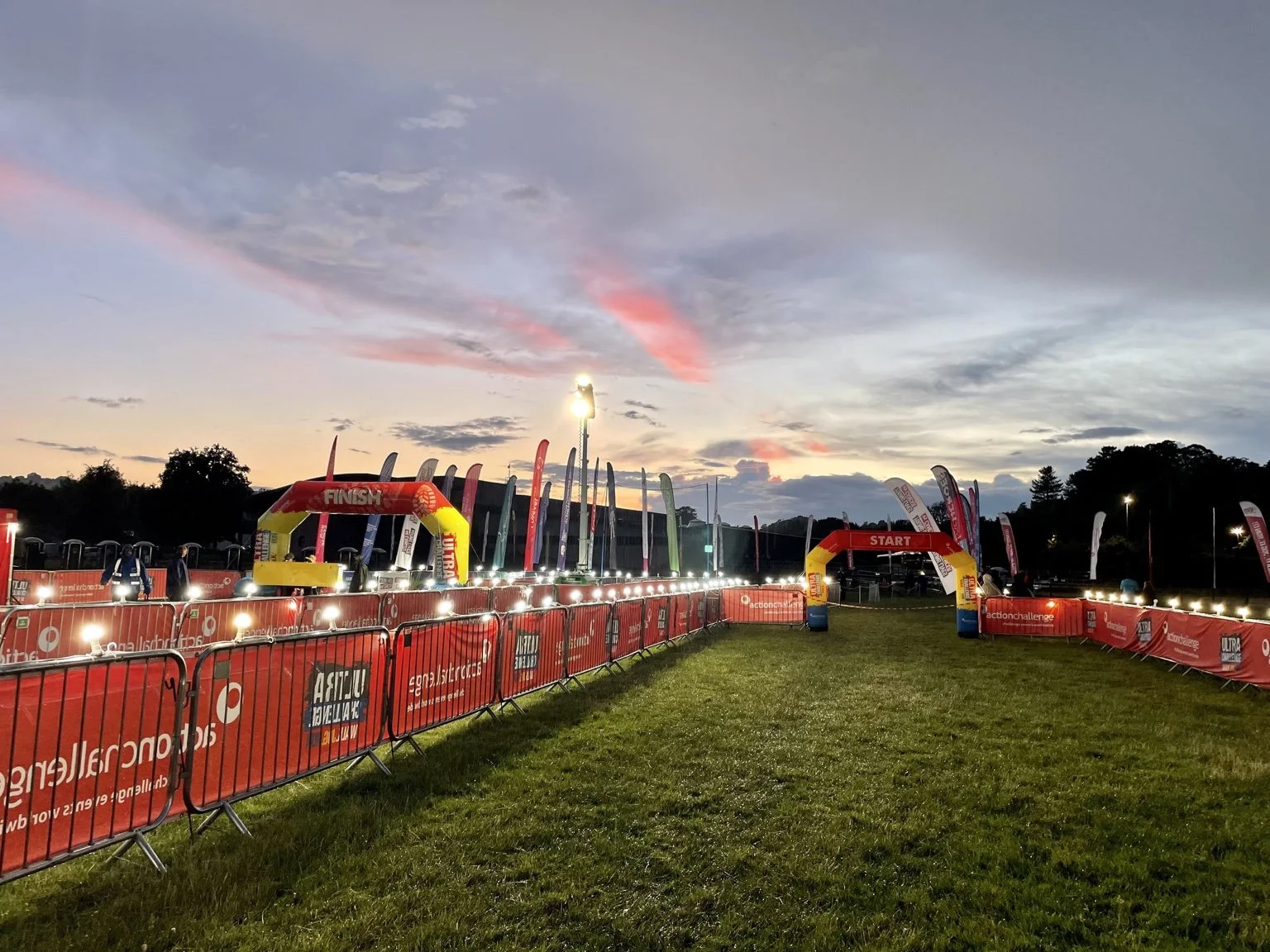
At some point during a long walk, there's a good chance you'll wonder why on earth you thought this was a good idea.
Your feet may hurt. Your legs are tired. The next rest stop seems miles away. And discovering you've still got another eight miles to walk can suddenly feel rather different from walking eight miles on a Sunday morning.
This is normal. Long-distance walking is as much a mental challenge as a physical one.
BREAK IT DOWN
Don't spend the whole day thinking about 26.2 miles.
Walk to the next rest stop. Then the next one. When things get difficult, even breaking the distance into the next mile can make it feel much more manageable.
EXPECT LOW POINTS
How you feel can change remarkably quickly.
A bad spell doesn't necessarily mean the rest of your walk will be miserable. Food, water, sorting out a sore foot or simply taking five minutes can completely change things.
WALK WITH PEOPLE
One of the best things about organised walking challenges is the people around you.
Chatting to another walker can distract you from tired legs — and there's something reassuring about knowing everyone else is going through much the same thing.
REMEMBER WHY YOU'RE THERE
Whether you're raising money, taking on a personal challenge or simply trying to prove to yourself that you can do it, remember what got you to the start line in the first place.
I'VE LEARNED NOT EVERY WALK GOES TO PLAN
I've had long-distance challenges that have gone brilliantly — and others where things have unravelled and I've had to stop.
That's taught me that there's a difference between things getting tough and something genuinely being wrong.
There will be times when you'll need to dig in and keep going. But don't ignore an injury, illness or anything that feels seriously wrong simply because you're determined to finish.
Finishing is fantastic. Getting yourself safely to the finish is more important.
The difficult miles are often the ones you remember most — particularly once you've crossed the finish line.
MARATHON WALK TRAINING FAQs
-
For someone who is already reasonably active, 8–12 weeks is a good starting point. If you're new to regular walking or haven't exercised much recently, give yourself longer.
The important thing is to build your distance gradually rather than trying to cram lots of long walks into the final few weeks.
-
No. You don't need to complete the full marathon distance before event day.
Your longest training walks should give you confidence that you can spend several hours on your feet while testing your footwear, kit, food and hydration. The combination of consistent training and progressively longer walks prepares you for the final distance.
-
For most people, building towards a longest training walk of around 18–20 miles is plenty.
You don't need to prove you can walk 26.2 miles before the event itself. Allow enough recovery time after your longest walk rather than doing it immediately before your challenge.
-
It varies enormously depending on fitness, terrain, hills, weather and how much time you spend at rest stops.
At a steady walking pace, expect a marathon-distance challenge to take several hours longer than a typical running marathon. Don't become too fixated on the clock unless your event has a specific cut-off time — completing the distance comfortably is a perfectly good goal.
-
You might be able to, particularly if you're already very fit and active, but I wouldn't recommend relying on that.
The challenge isn't simply whether your cardiovascular fitness can cope. Your feet, legs and joints need to become accustomed to hours of continuous walking, and training gives you the opportunity to discover problems with shoes, socks, kit and nutrition before event day.
-
There isn't one correct answer.
Walking shoes, trail shoes and lightweight walking boots can all work well depending on the terrain, weather and what you're comfortable wearing.
The most important thing is that whatever you wear on event day has been thoroughly tested on your longer training walks.
-
For most people, three or four purposeful sessions a week is enough.
That might include two shorter walks during the week, your important longer weekend walk and perhaps an easy recovery walk. Adding one or two short strength sessions can also help.
You don't need to walk every day — recovery is part of your training too.
-
Eat small amounts regularly rather than waiting until you're starving or running low on energy.
On an organised challenge there may be rest stops providing food, snacks and water, so check your event guide before deciding what to carry. Take a few familiar snacks of your own and practise eating them during your longer training walks.
-
Deal with them early.
If you notice rubbing or a hotspot developing, stop and sort it out rather than hoping it'll disappear. Carry a small foot-care kit with blister plasters or tape and consider taking a spare pair of socks.
Your long training walks are also where you should identify any recurring problems before event day.
READY TO TAKE ON THE CHALLENGE?
You don’t need to be an ultra-athlete to walk a marathon.
Train consistently, build your distance gradually, get your kit right — and respect the 26.2 miles.
Then when event day arrives, enjoy it. There’s something pretty special about crossing a finish line you’ve spent weeks working towards.