

ESSENTIAL KIT FOR LONG-DISTANCE WALKS
What I actually carry for marathon walks, 50km and 100km challenges — and what I've learned the hard way
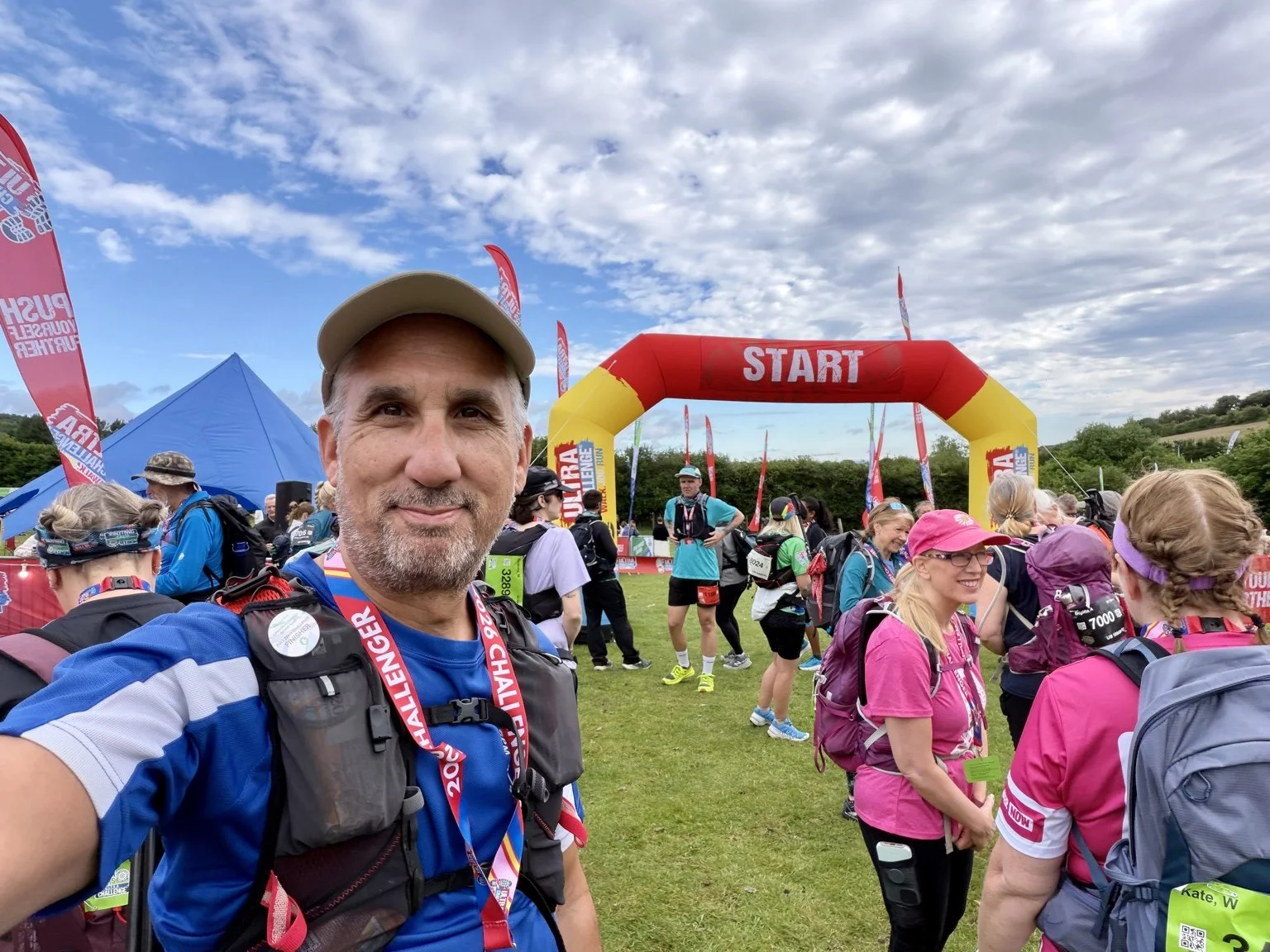
WHAT DO YOU ACTUALLY NEED?
When I first started taking on longer walking challenges, I probably spent far too much time thinking about kit.
Over the years I've carried too much, forgotten things I really needed, worn the wrong gear and discovered that something which seems insignificant at 10km can become extremely important at 70km.
The good news is that you don't need a mountain of expensive equipment to take on a long-distance walking challenge.
What matters is having the right basics, knowing they work for you and — perhaps most importantly — testing everything in training before you use it on challenge day.
What follows isn't a shopping list of everything you could buy. It's the kit I consider important based on my own experience of marathon-distance walks, 50km challenges, 100km events and plenty of long training days.
If it's going to be on your feet, on your back or next to your skin for 12, 18 or even 24 hours, don't discover on the day that it doesn't work.
START WITH YOUR FEET
If there's one area where I'd avoid cutting corners, it's your feet.
You can put up with a jacket you don't particularly like or a rucksack that's slightly annoying. Get your footwear wrong and your challenge can be over long before the finish line.
Shoes or boots?
For most organised long-distance walking challenges, I generally prefer lightweight walking shoes or trail shoes rather than traditional heavy walking boots.
They're lighter, more flexible and, over 50km or 100km, that makes a difference.
But there's no single right answer. Terrain, weather and personal preference all matter. The most important thing is that whatever you choose has already covered plenty of miles before challenge day.
Never start a long-distance challenge in brand-new footwear.
And remember that your feet can swell considerably after hours of walking. A shoe that feels perfectly snug in the shop may feel very different after 40 miles.
Socks matter more than you think
I learned fairly quickly that good socks are every bit as important as good shoes.
I want something comfortable, moisture-wicking and proven over long distances. On longer challenges I'll also carry at least one spare pair.
Changing into clean, dry socks part-way through a 100km can feel ridiculously good.
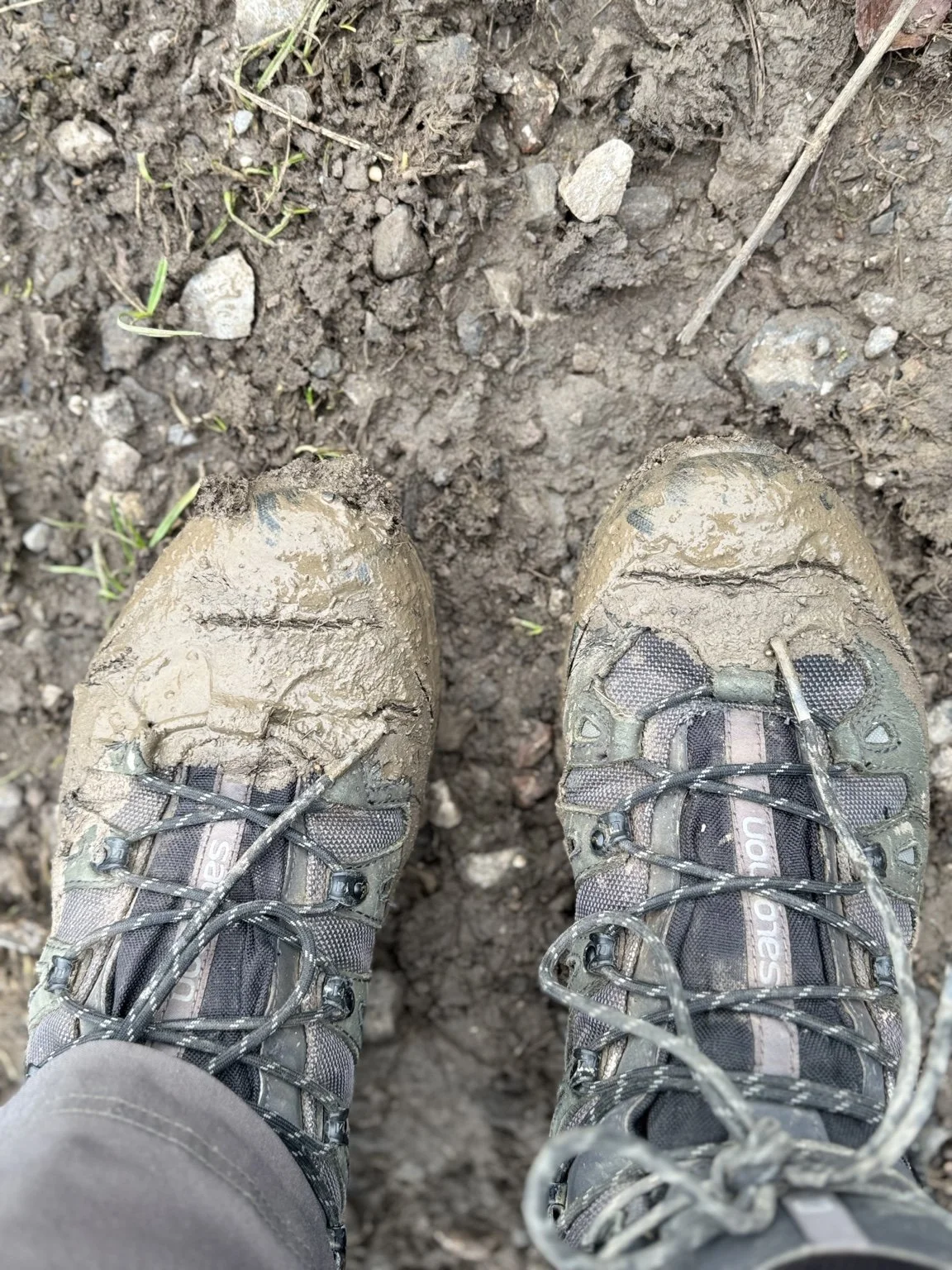
Blisters: deal with them early
A tiny hot spot at 15km can become a serious problem at 50km.
If something starts rubbing, stop and deal with it. Don't convince yourself it'll magically disappear.
Carry whatever blister treatment you've tested and know how to use — whether that's tape, blister plasters or your preferred combination.
The biggest lesson?
Learn what works for your feet during training, not during the event.
WHAT TO WEAR
For a long-distance walking challenge, comfort beats fashion every time.
You'll potentially be wearing the same clothes for 12 hours or more, through changing temperatures, wind, rain and — on a 100km — possibly from daylight into the middle of the night.
The key for me is layers.
I want clothing that's lightweight, comfortable and quick-drying, with the ability to add or remove layers as conditions change. Even on a warm day, I'll usually have another layer in my pack.
And there's one item I wouldn't gamble on:
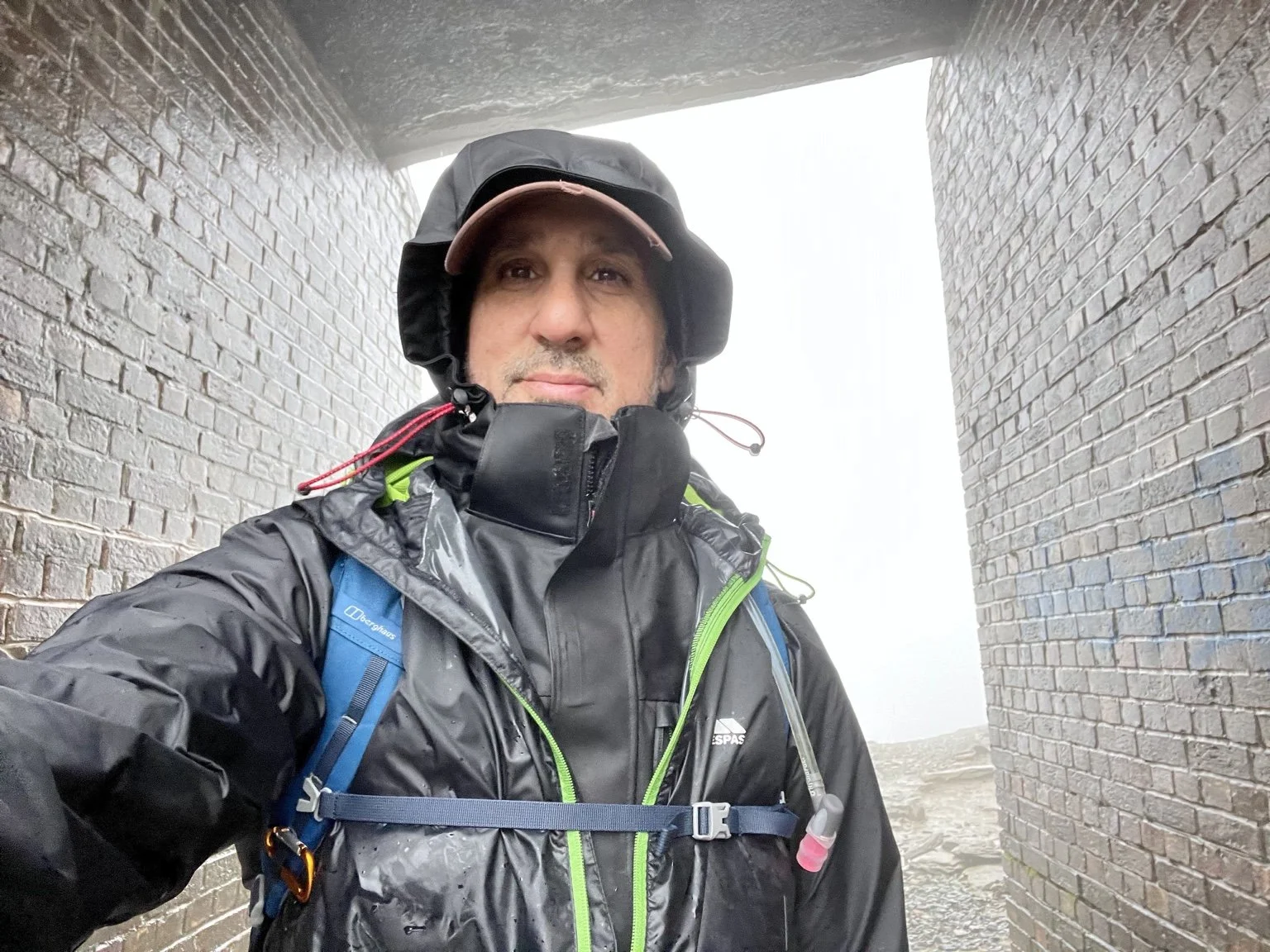
A proper waterproof
A lightweight waterproof jacket that genuinely keeps the rain out is worth carrying even when you're fairly confident you won't need it.
On longer events, particularly when walking overnight, don't underestimate how cold you can get when you're tired or when you stop at a checkpoint.
Wear it before the event
Challenge day isn't the time to discover that your trousers rub after four hours, your shirt doesn't breathe particularly well or your waterproof turns you into a mobile greenhouse.
The same rule applies here as with footwear:
If you haven't worn it on a long training walk, don't wear it for the first time on challenge day.
And don't forget sun protection. A cap, sunglasses and sunscreen can be every bit as important as a waterproof on the right — or wrong — day.
WHAT TO CARRY IT IN
One of the easiest mistakes on a long-distance challenge is carrying too much.
I've done it.
When you're preparing, there's a temptation to pack for every possible eventuality. But everything you put in your bag has to travel every single mile with you.
Over 50km or 100km, unnecessary weight matters.
Rucksack or trail vest?
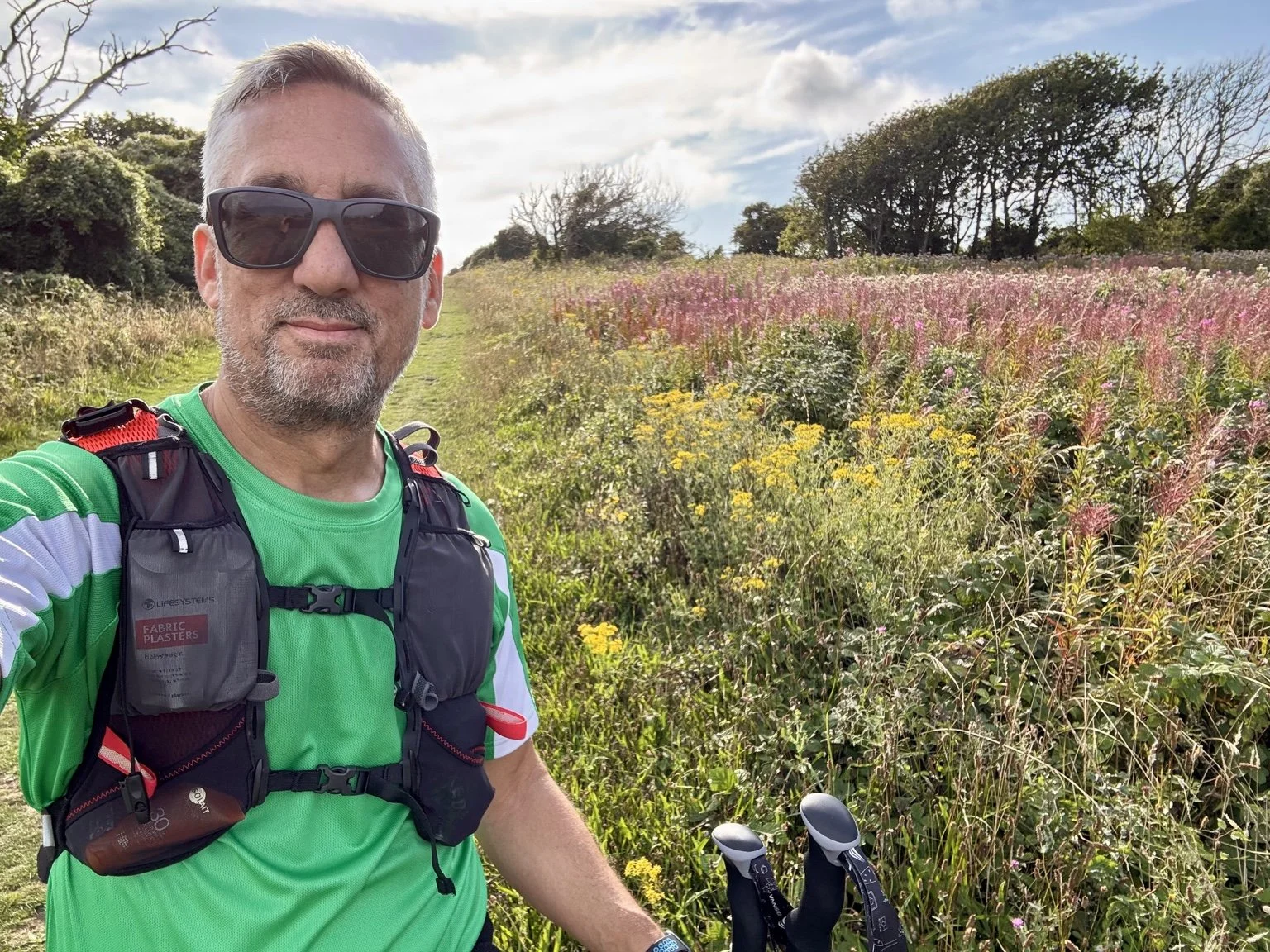
For shorter hikes and mountain days, I'll happily use a conventional daypack. But for organised long-distance challenges, I've increasingly moved towards a running-style trail vest.
I like having water, food, my phone and other essentials within easy reach without constantly taking my pack off.
It also encourages me to carry less.
That's not to say you need a trail vest. A small, comfortable daypack works perfectly well. What matters is that it fits properly, doesn't rub and you've worn it fully loaded on your training walks.
I like having water, food, my phone and other essentials within easy reach without constantly taking my pack off. Even my blister kit lives in one of the front pockets, so I can get to it the moment I feel a problem developing.
Don't carry what the event provides
Before packing, check exactly what you'll get at checkpoints.
Many organised challenges provide water, food and regular support along the route, so there's little point carrying several litres of water and enough food to survive a week in the wilderness.
On the other hand, never assume something will be provided without checking.
Use bag drops
On longer events, particularly 100km challenges, bag-drop facilities can be brilliant.
Spare socks, another layer, food you know you'll want, batteries or a power bank — even a change of top can be waiting for you later rather than sitting on your back for 50km.
My rule: carry what I need to reach the next support point safely and comfortably — not everything I might possibly need for the entire event.
FOOD & HYDRATION
FOOD BECOMES SURPRISINGLY IMPORTANT
On a long-distance challenge, eating isn't really about having a nice lunch.
It's fuel.
The longer I've walked, the more I've realised how important it is to keep eating — even when I don't particularly feel like it.
I've made the mistake of waiting until I'm hungry. By then, your energy can already be disappearing and getting it back isn't always easy.
So now I try to eat little and often.
And despite the shelves full of energy gels, powders and sports nutrition, I've learned that I generally do better with fairly normal food.
Bananas. Fruit. Crisps. Pastries. Sandwiches. Something salty. Something sweet.
Whatever I can actually face eating.
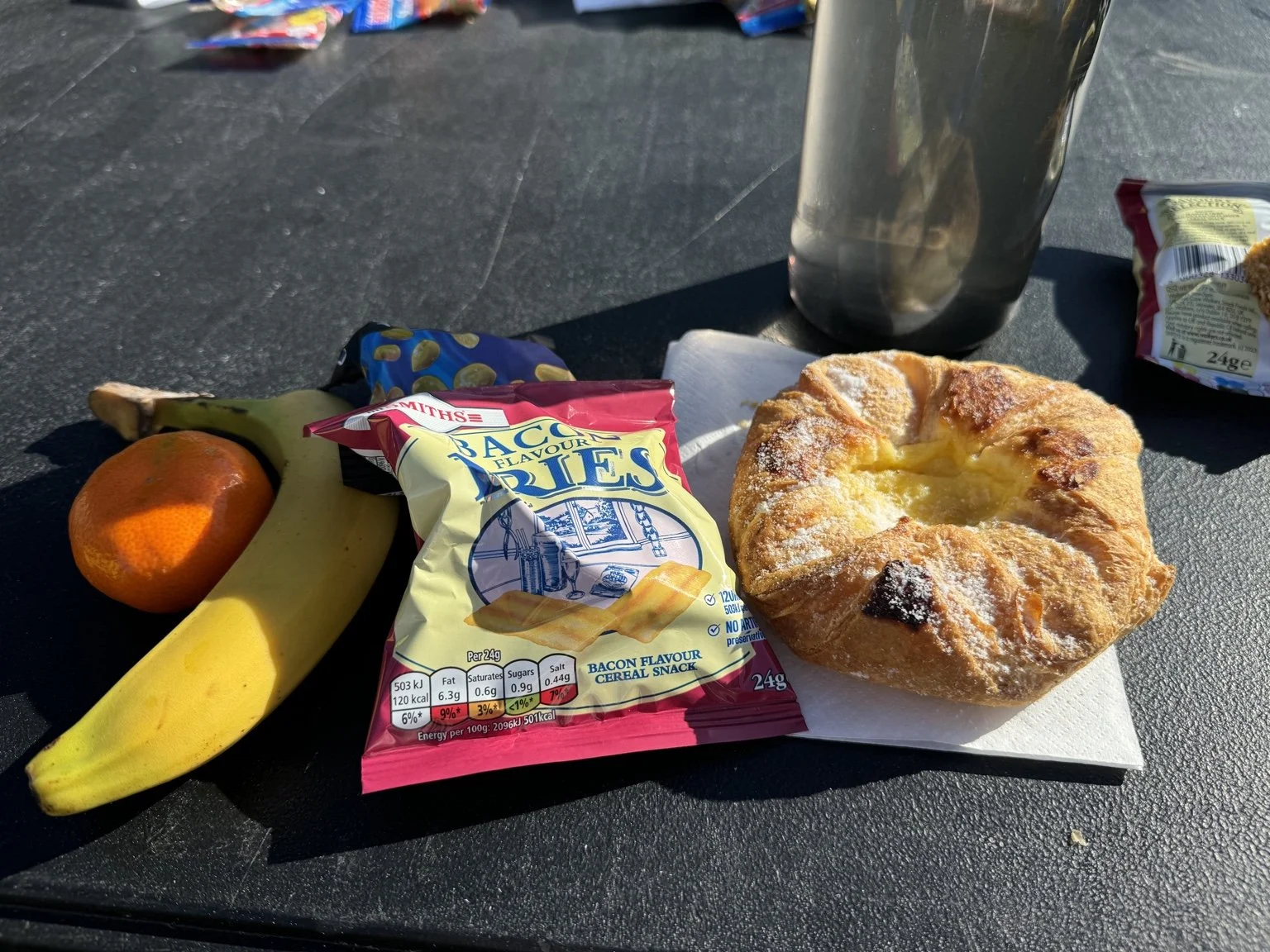
On the really long challenges, what you want can change completely as the hours pass. Early on I'll happily grab fruit, snacks or something sweet. Much later, particularly when it's cold or you're heading into the night, something hot can feel like absolute luxury.
That's another reason not to rely entirely on what you think you'll want before the event. Your appetite at 70km may bear very little resemblance to your appetite at 10km.
Hydration matters just as much. I carry water and drink regularly rather than waiting until I'm desperately thirsty. On longer events I'll also use electrolytes, particularly in warmer weather.
But I've learned not to overcomplicate any of it.
Eat before you're starving. Drink before you're thirsty. And eat food you know your stomach can cope with.
THE LESSON: A long-distance challenge isn't the day to experiment with a revolutionary new nutrition strategy. Work out what works for you during training — and stick with it.
CHECKPOINTS CHANGE EVERYTHING
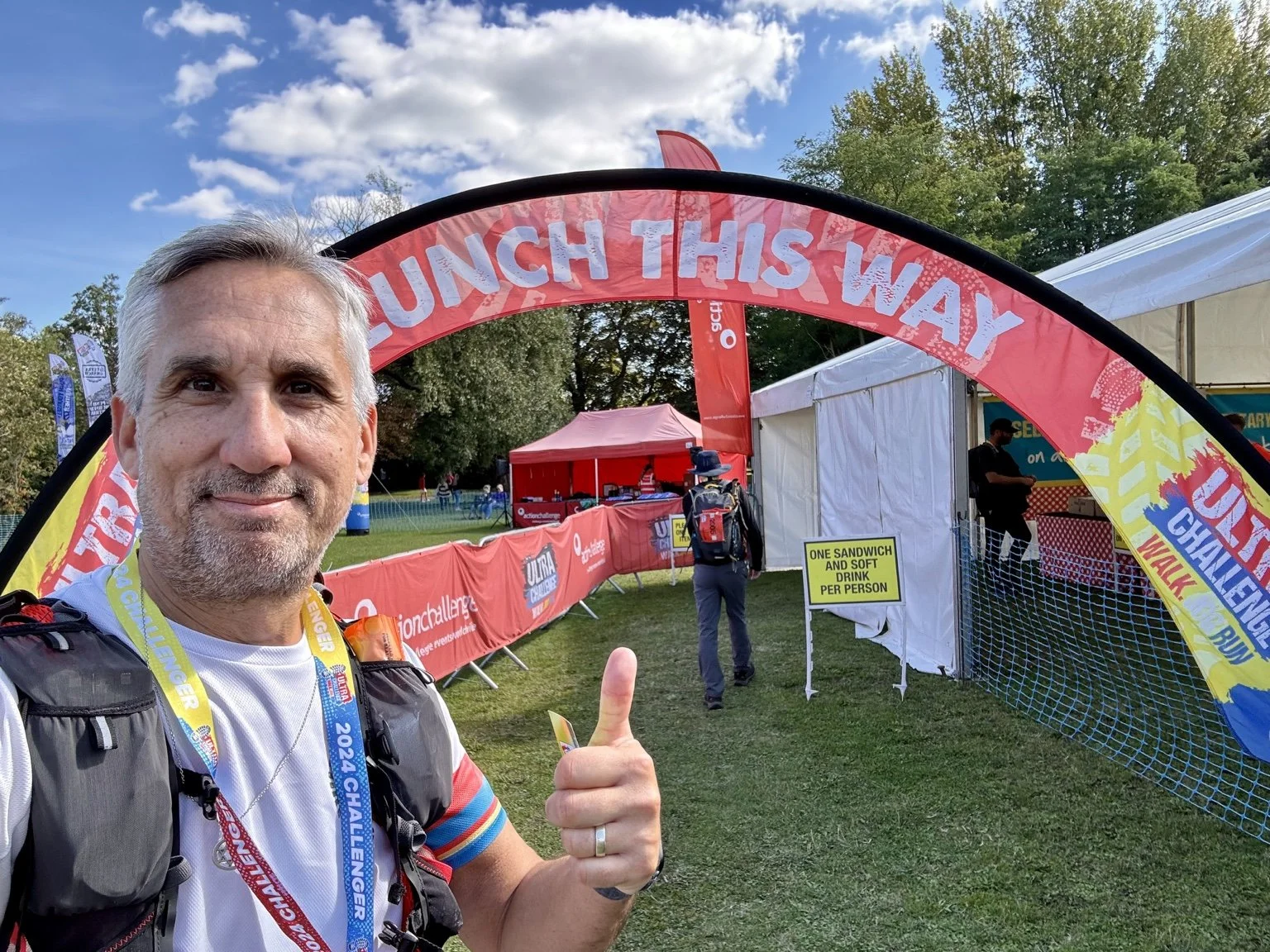
When you first look at a 50km or 100km route, the total distance can feel enormous.
So I try not to think about it.
Instead, I think about the next checkpoint.
On organised challenges, checkpoints become little milestones. Somewhere to refill your water, grab some food, sort your feet out, use the loo and — occasionally — sit down for five minutes and wonder why you thought any of this was a good idea.
They also completely change the way I think about the distance.
Rather than I've still got 70km to go, it becomes I've got 12km to the next stop.
Twelve kilometres feels manageable. Seventy doesn't.
The same trick works when things start getting difficult. Don't obsess about the finish line. Get to the next checkpoint. Then the next one. Eventually, there aren't any checkpoints left.
There is a danger, though.
Checkpoints can be very difficult places to leave.
The longer the challenge, the more tempting that chair becomes. You sit down. You take your shoes off. Someone hands you a cup of tea. Suddenly heading back outside for another 15km seems like an absolutely terrible idea.
I've learned to do what I need to do, but not get too comfortable.
THE LESSON: Break a huge challenge into smaller ones. Forget 100km. Just get to the next checkpoint.
IT WAS NEVER REALLY ABOUT THE MEDALS
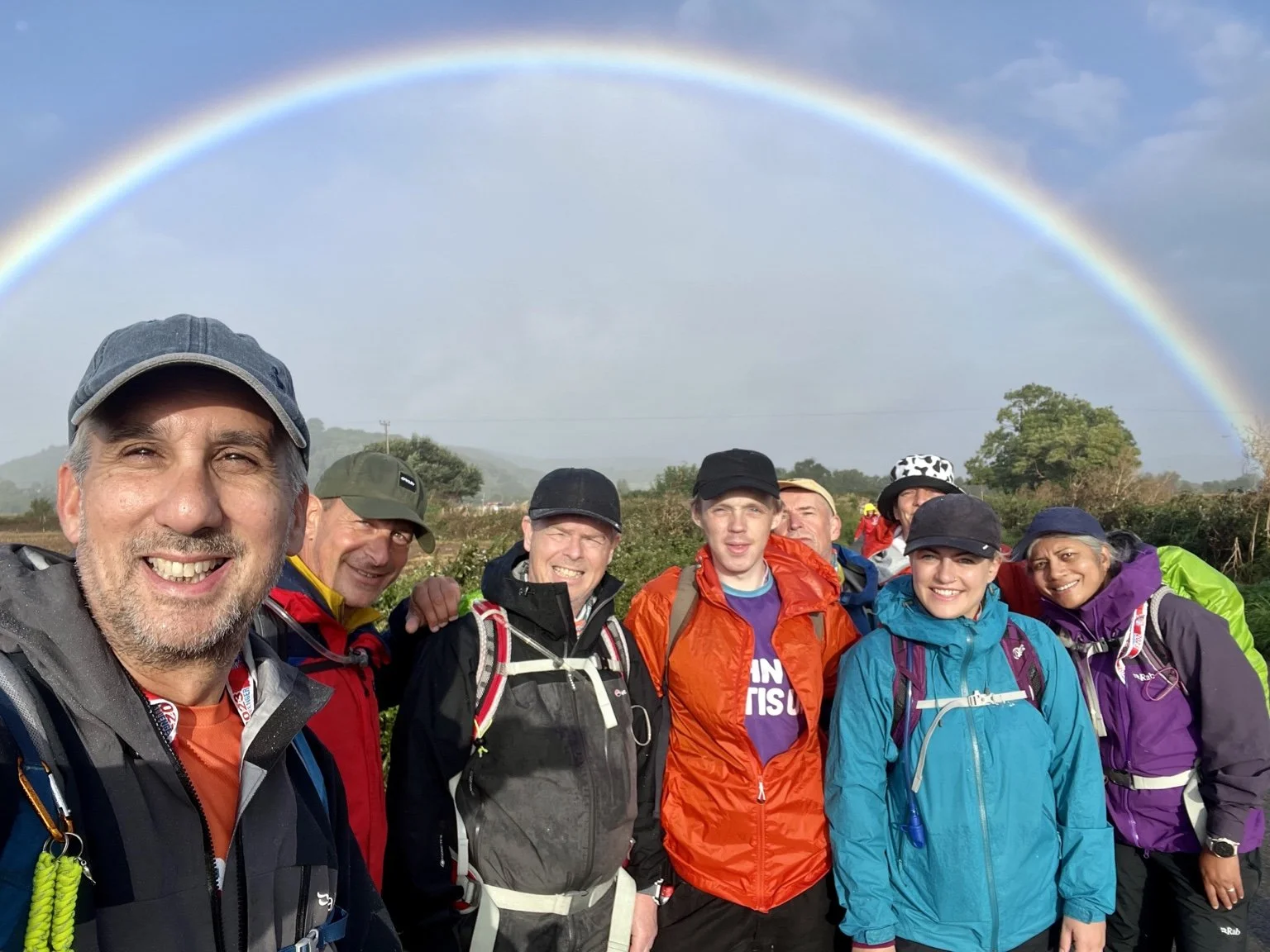
Over the years I've collected quite a few medals.
And yes, I like them. There's something very satisfying about having something hanging around your neck at the end of a day when, several hours earlier, you were seriously questioning your life choices.
But the medals aren't really why I keep doing this.
It's the experience that comes with them.
The ridiculously early starts. Walking through places I might otherwise never have seen. Conversations with complete strangers at checkpoints. Helping someone who's struggling — and being helped when I'm the one having a bad patch.
It's the moment the sun comes up after you've been walking through the night.
It's discovering that you're capable of going further than you thought.
And sometimes it's discovering that you're not — at least not that day.
Looking back, I remember far more about what happened between the start and finish lines than I do about crossing either of them.
That's probably why I keep signing up for another one.
THE LESSON: The medal is nice. But the memories, the people and everything that happens along the way are the real reward.
SO…WHAT'S YOUR CHALLENGE?
I started with a walk.
I certainly didn't start out thinking I'd eventually be walking marathon distances, 50km events and 100km challenges.
And that's probably the point.
You don't have to start with 100km.
Pick something that feels just a little bit beyond what you think you can do. Train for it. Turn up. See what happens.
Maybe that's your first organised 10km walk. Maybe it's a marathon. Maybe you've already done those and 50km is starting to sound strangely tempting.
And if you're currently looking at 100km and thinking absolutely not…
I used to think exactly the same thing.
Whatever you choose, prepare properly, respect the distance and enjoy the experience.
Because you never quite know where that first challenge might lead.
Go on. Challenge accepted?