

HOW TO TRAIN FOR A 50KM WALKING CHALLENGE
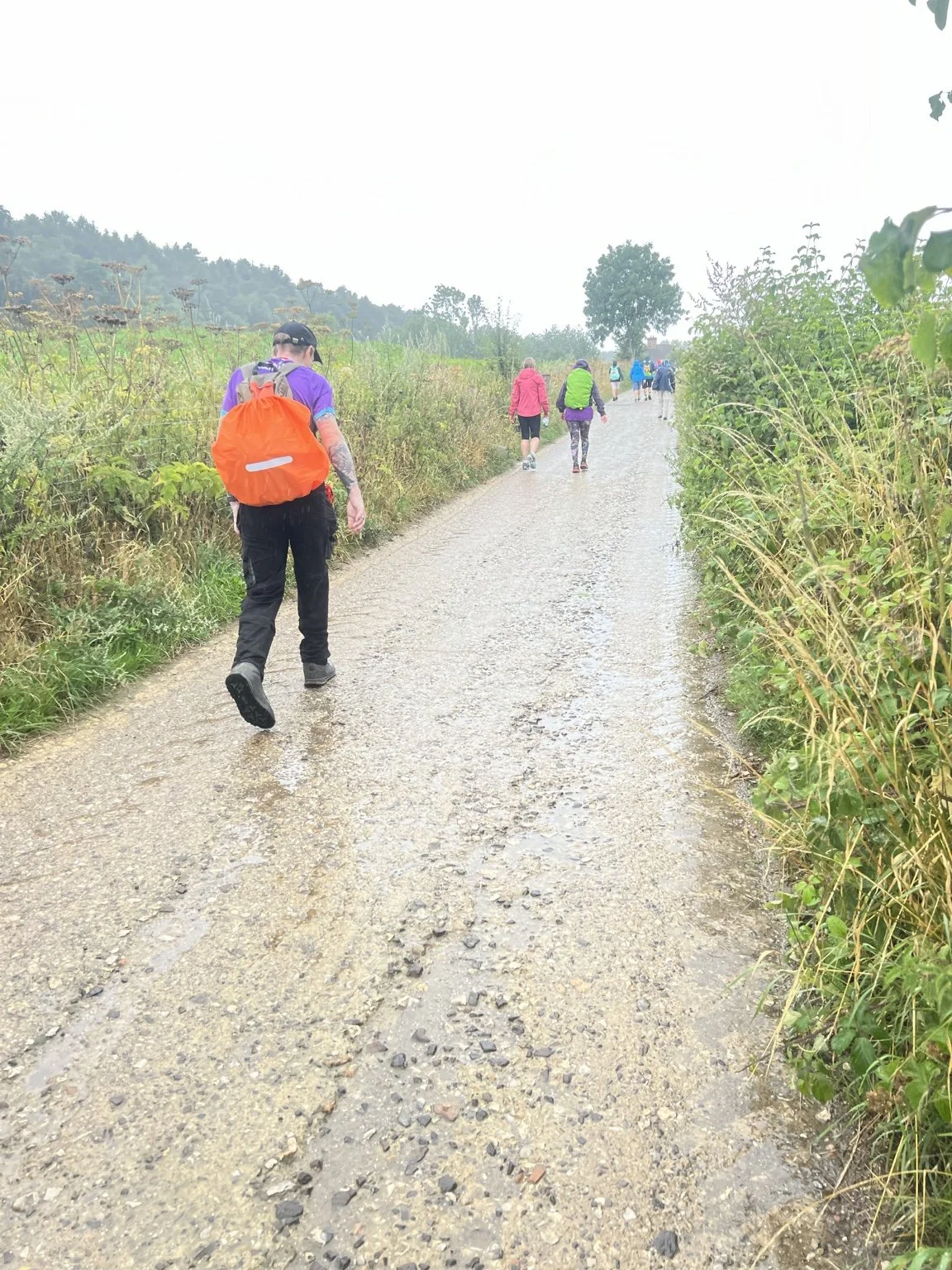
A practical 12–16 week training guide to help you tackle 31 miles / 50km — and still be smiling at the finish
YOUR 12–16 WEEK 50KM TRAINING PLAN
You don't need to walk 50km before event day.
Instead, build your endurance gradually through a combination of regular shorter walks, increasingly long weekend walks and — as your training progresses — back-to-back walking days.
Those back-to-back days are particularly useful for 50km because they teach you to get up and walk again when your legs are already tired.
WEEKS 1–4 — BUILD THE BASE
Long walk: 6–10 miles / 10–16km
Get into a consistent routine with two or three shorter walks during the week and one longer walk at the weekend.
Don't worry about speed. Concentrate on building regular mileage and getting comfortable spending a few hours on your feet.
WEEKS 5–8 — BUILD THE DISTANCE
Long walk: 10–15 miles / 16–24km
Gradually increase your weekend distance while continuing with shorter walks during the week.
Start using the footwear, backpack, clothing, food and hydration strategy you're considering for event day.
WEEKS 9–12 — GO LONG
Long walk: 15–20 miles / 24–32km
This is where your training becomes more specific.
Include some back-to-back weekends — perhaps a 15–18 mile walk on Saturday followed by an easier 5–8 miles on Sunday.
You're learning to keep moving on tired legs without needing to complete the full 50km distance.
FINAL 2–4 WEEKS — PEAK & TAPER
Build towards your longest training walk of around 20–22 miles / 32–35km.
After that, begin reducing your mileage so your body has time to recover. Keep walking, but don't try to squeeze in one last monster session because you're worried you haven't done enough.
Arriving at the start line fresh is more valuable than arriving with one extra 25-mile training walk in your legs.
YOUR LONGEST TRAINING WALK DOESN'T NEED TO BE 50KM.
The combination of consistent weekly walking, long training days and back-to-back sessions prepares you for those final miles on event day.
WHY BACK-TO-BACK WALKS MATTER
Once you're training for 50km, simply making your longest walk longer isn't the only way to build endurance.
Back-to-back walks — a longer walk one day followed by another walk the next — teach your body what it feels like to start walking when your legs are already tired.
You don't need to do them every weekend. Introduce them during the later stages of your training and build them gradually.
WHAT COULD THAT LOOK LIKE?
EARLY TRAINING
Saturday: 10 miles
Sunday: 3–4 easy miles
MID TRAINING
Saturday: 14–16 miles
Sunday: 5–6 miles
PEAK TRAINING
Saturday: 18–20 miles
Sunday: 6–8 easy miles
THE SECOND WALK ISN'T ABOUT SPEED
The Sunday walk should be easy. You're not trying to set a pace or prove anything.
The benefit comes from putting your shoes back on, getting your legs moving and spending some more time on your feet while carrying some fatigue from the previous day.
It's also another opportunity to discover how your feet, shoes and legs recover after a long walk — useful information before committing them to 31 miles in one day.
DON'T TURN EVERY WEEKEND INTO AN ULTRA.
Back-to-back walking is a useful training tool, not something you need to do constantly. Recovery matters too. If you're exhausted or something hurts beyond normal post-walk soreness, give your body time to recover.
WHAT SHOULD A TYPICAL 50KM TRAINING WEEK LOOK LIKE?
You don't need to spend every day walking. Three or four walking sessions a week, combined with recovery and some strength work, is enough for most people.
As the challenge gets closer, your weekend long walk becomes increasingly important — with occasional back-to-back weekends during the later stages of training.
MONDAY — Rest / recovery
Give your legs a chance to recover from the weekend.
TUESDAY — 4–6 mile brisk walk
A purposeful midweek walk at a comfortable but reasonably brisk pace.
WEDNESDAY — Strength training or rest
Focus on legs, glutes, calves and core.
THURSDAY — 4–6 mile walk
Ideally include some hills or varied terrain.
FRIDAY — Rest
Particularly important before your longer weekend sessions.
SATURDAY — Long training walk
This is your key session. Build the distance gradually as you progress through the plan.
SUNDAY — Recovery walk or occasional second long walk
Usually keep this short and easy. During later training, some weekends can become the second part of your back-to-back sessions.
YOUR WEEK WON'T ALWAYS LOOK LIKE THIS
Work, family, weather and life will inevitably get in the way sometimes. Don't try to make up missed sessions by cramming extra mileage into the following few days.
Consistency over 12–16 weeks matters far more than having a perfect training diary.
Your Saturday long walk remains the most important session, but as the distances increase, recovery becomes increasingly important too. A 20-mile training walk followed by several days of exhausted legs isn't necessarily better training than a slightly shorter walk that you recover from well.
TRAIN FOR YOUR ACTUAL EVENT
If your 50km challenge is hilly, train on hills.
If it's predominantly trails, spend some of your training time on trails.
If there's a realistic chance you'll finish in poor weather or fading light, don't do every training walk on a sunny Saturday morning.
The closer your training resembles what you'll face on event day, the fewer surprises you're likely to encounter.
FEET, FOOTWEAR & KIT FOR A 50KM WALK
At 50km, comfort matters.
A shoe that rubs slightly after 10 miles, a backpack strap that's mildly irritating or a pair of socks that hold too much moisture can become a very different proposition after 25 miles.
Your long training walks aren't just about fitness — they're dress rehearsals for your kit.
LOOK AFTER YOUR FEET
Use your longer walks to test your shoes, socks and foot-care routine.
If you feel a hotspot developing, deal with it early. Carry blister plasters or tape and a spare pair of socks.
WEAR PROVEN FOOTWEAR
Trail shoes, walking shoes or lightweight boots can all work — what matters is that you've comfortably covered significant distances in them.
Never start a 50km challenge in new footwear.
KEEP YOUR PACK LIGHT
You'll be carrying it for many hours, so don't automatically pack for every conceivable emergency.
On supported events, rest stops usually provide opportunities to refill water and pick up food. Check your event guide and carry what you need between stops.
PREPARE FOR CHANGING CONDITIONS
A 50km challenge can start in one kind of weather and finish in another.
Carry appropriate layers and waterproofs, and remember that you'll probably feel very different after eight or ten hours than you did at the start.
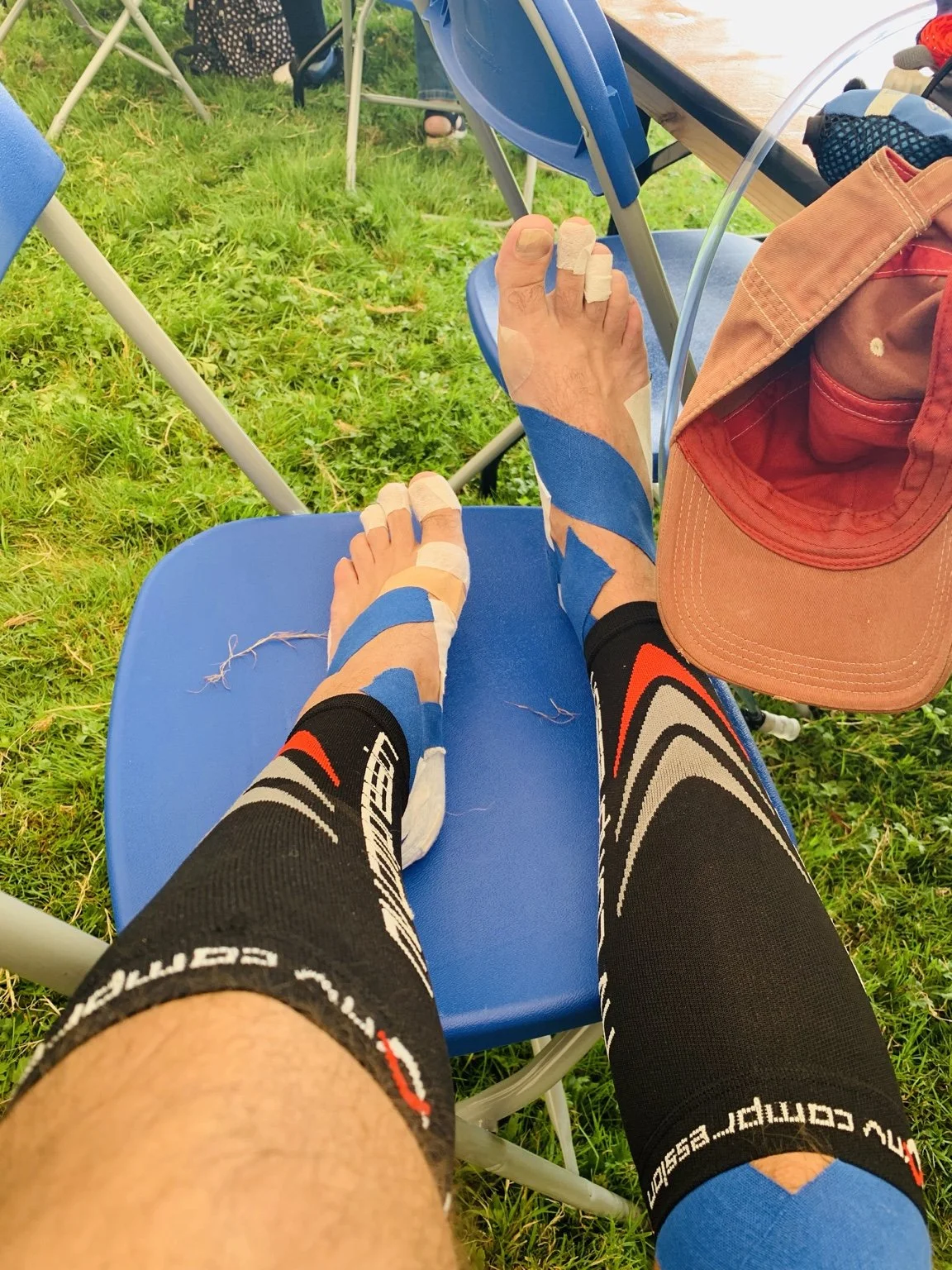
SHOULD YOU CHANGE YOUR SOCKS DURING A 50KM WALK?
You don't have to — but having the option is well worth the tiny amount of extra weight.
If your feet are wet from rain or sweat, changing into clean, dry socks at a rest stop can make a huge difference.
It also gives you an opportunity to check your feet properly and deal with any hotspots before they become blisters.
I've learned this one the hard way. On a long-distance challenge, if your feet start telling you there's a problem, listen to them. Stopping for a few minutes to tape a hotspot can save you a lot more pain later.
MAKE USE OF BAG DROPS
Some organised 50km events provide a bag-drop service, either for collection at the finish or occasionally at an intermediate point.
If yours does, use it.
A finish bag might include:
Dry clothes • clean socks • comfortable shoes • warm layer • anything you don't need while walking
There's little point carrying something for 31 miles if you only need it after you've finished.
Check your event guide carefully, though — baggage arrangements vary considerably between events.
Those clean shoes and socks waiting at the finish may turn out to be some of your favourite possessions. 😄
HOW TO FUEL FOR A 50KM WALK
By the time you're walking 50km, nutrition becomes a bigger part of the challenge.
You could be on your feet for 10-12 hours or more, so relying on one big meal or waiting until you're hungry isn't a great strategy. The aim is to keep topping up your energy throughout the day.
The good news is that on many organised 50km challenges, rest stops provide food, snacks and water, so you shouldn't need to carry everything yourself.
Check your event guide before you go so you know what's available and where.
START WITH BREAKFAST
Eat a familiar breakfast before the start, ideally something you've already tested before a long training walk.
Don't suddenly decide that event morning is the perfect opportunity to reinvent your diet.
EAT LITTLE & OFTEN
Take on small amounts regularly rather than waiting until you're starving.
As the hours pass, your appetite can change. Something you loved at mile five may be the last thing you fancy at mile 25.
MIX SWEET & SAVOURY
Bars, fruit and sweets can be useful, but after hours of sweet food you may start craving something savoury.
Rest stops on supported events can be brilliant for giving you more substantial options as the day progresses.
KEEP DRINKING
Drink regularly and use the rest stops to refill your bottles.
How much you need will depend on the weather, your pace and how much you sweat. In warm conditions or over a very long day, an electrolyte drink can also be useful.
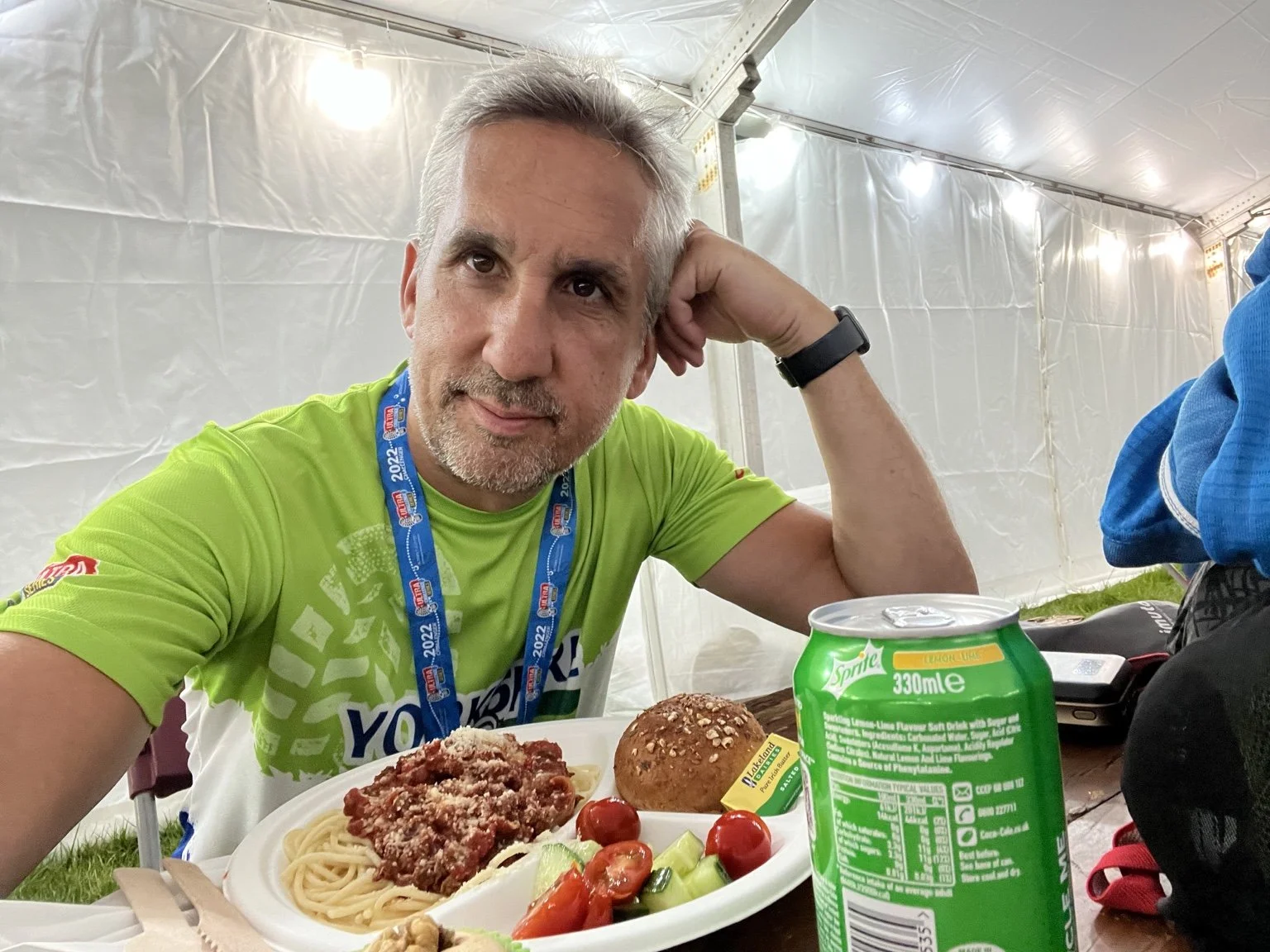
REAL FOOD CAN BECOME VERY APPEALING
After several hours of walking, there's a point where another energy bar may not exactly fill you with joy.
One of the advantages of a well-supported 50km challenge is that some rest stops offer proper food, particularly at the larger stops.
And after you've been walking all day, sitting down for something substantial can be extremely welcome.
Just remember that you've still got to get up and start walking again afterwards. 😄
Your long training walks are the place to discover what your stomach tolerates, how often you prefer to eat and which foods actually appeal to you when you're tired.
TRAIN YOUR FUELLING AS WELL AS YOUR LEGS
Don't wait until event day to find out whether your favourite snack still seems like a good idea after six hours of walking.
DON'T RELY ENTIRELY ON THE REST STOPS
Even on a supported event, carry a few snacks that you know work for you.
Rest-stop menus vary, you may not fancy what's available, and occasionally the next stop can feel an awfully long way away.
HOW FAST SHOULD YOU WALK A 50KM CHALLENGE?
The temptation at the start of a 50km challenge is exactly the same as with a marathon: fresh legs, plenty of excitement and lots of people around you.
The difference is that you'll still be walking long after that early enthusiasm has disappeared.
Your goal isn't to see how quickly you can cover the first 10 miles. It's to find a pace you can comfortably maintain for hour after hour.
START SLOWER THAN YOU THINK
If the opening miles feel ridiculously comfortable, that's probably a good sign.
Don't worry about people streaming past you. Some you'll never see again. Others you'll probably pass several hours later.
Save your energy for the second half.
THINK IN EFFORT, NOT JUST SPEED
There isn't a perfect pace for 50km.
Terrain, hills, weather, fitness and the amount of time you spend at rest stops all affect your overall speed.
On flatter sections you may naturally move faster; on steep climbs, slow down. Trying to maintain the same speed regardless of terrain wastes energy you may really want later.
KEEP THE REST STOPS UNDER CONTROL
Rest stops are an important part of a supported challenge. Refill your water, eat, use the toilet, sort out your feet and take the break you need.
But there's a difference between taking a useful break and accidentally moving in. 😄
Five or ten unnecessary minutes at several stops can add a surprising amount to your finishing time.
And after sitting down for too long, getting those legs moving again can be considerably less enjoyable.
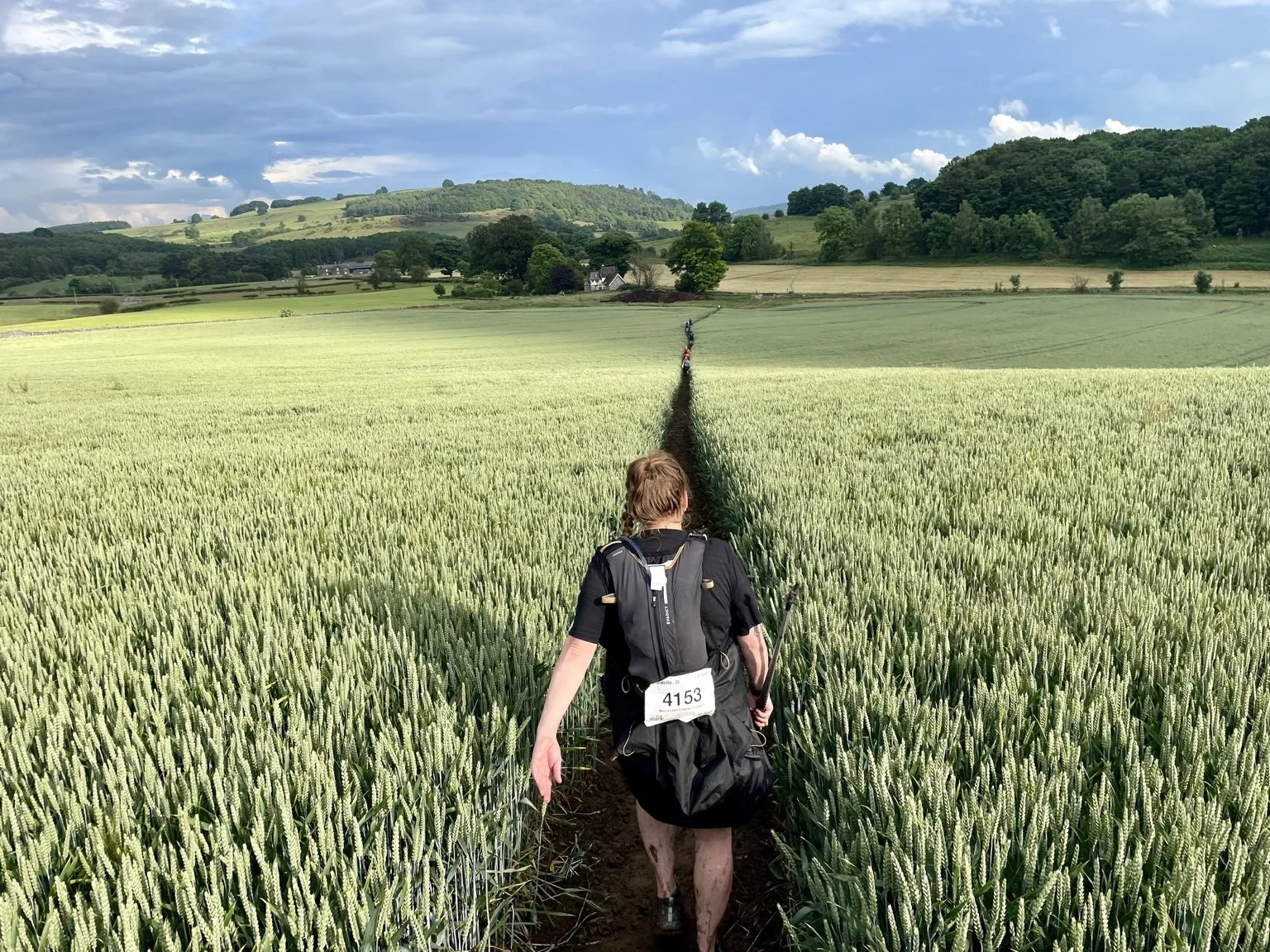
EXPECT YOUR PACE TO DROP
Don't be surprised if you're walking more slowly at 40km than you were at 10km.
Fatigue accumulates, hills feel bigger and stops can become longer. That's normal.
The aim is to manage your effort well enough that you're still moving purposefully during those final miles.
DON'T RACE THE FIRST HALF
A 50km challenge doesn't really reveal itself until you're beyond marathon distance.
Get to halfway feeling as though you've got plenty left. Keep eating, keep drinking and keep moving.
If you're still feeling strong later, that's the time to increase the pace — not in the opening few miles.
KNOW YOUR EVENT CUT-OFFS
If your event has time limits or checkpoint cut-offs, know them before you start.
You don't need to obsess over the clock, but you should have a rough idea of the pace you need to maintain including your stops, not just while you're walking.
BEYOND MARATHON DISTANCE: WHEN 50KM GETS TOUGH
There's a slightly strange moment in a 50km challenge when you've covered a marathon distance — which sounds like it ought to mean you've finished — and you've still got another five miles or so to walk.
By then your legs are tired, your feet may be complaining and even relatively small hills can suddenly look considerably bigger.
This is where the mental side of a 50km challenge really kicks in.
STOP THINKING ABOUT THE FINISH
If you've still got 10 miles to go, constantly thinking about those 10 miles can make them feel enormous.
Break the challenge down.
Get to the next rest stop. Then the next checkpoint. Then the next mile.
Eventually, one of those little targets will be the finish.
EXPECT THE LOW POINTS
You probably won't feel progressively worse all day.
You can have a terrible half-hour, eat something, change your socks, have a chat with another walker and suddenly feel remarkably human again.
A bad patch doesn't necessarily mean your day is falling apart.
KEEP MOVING FORWARD
As you tire, there's a temptation to spend longer at every rest stop.
Take the breaks you need — particularly if you need to eat or sort out your feet — but remember that sometimes the hardest part is simply getting out of the chair again.
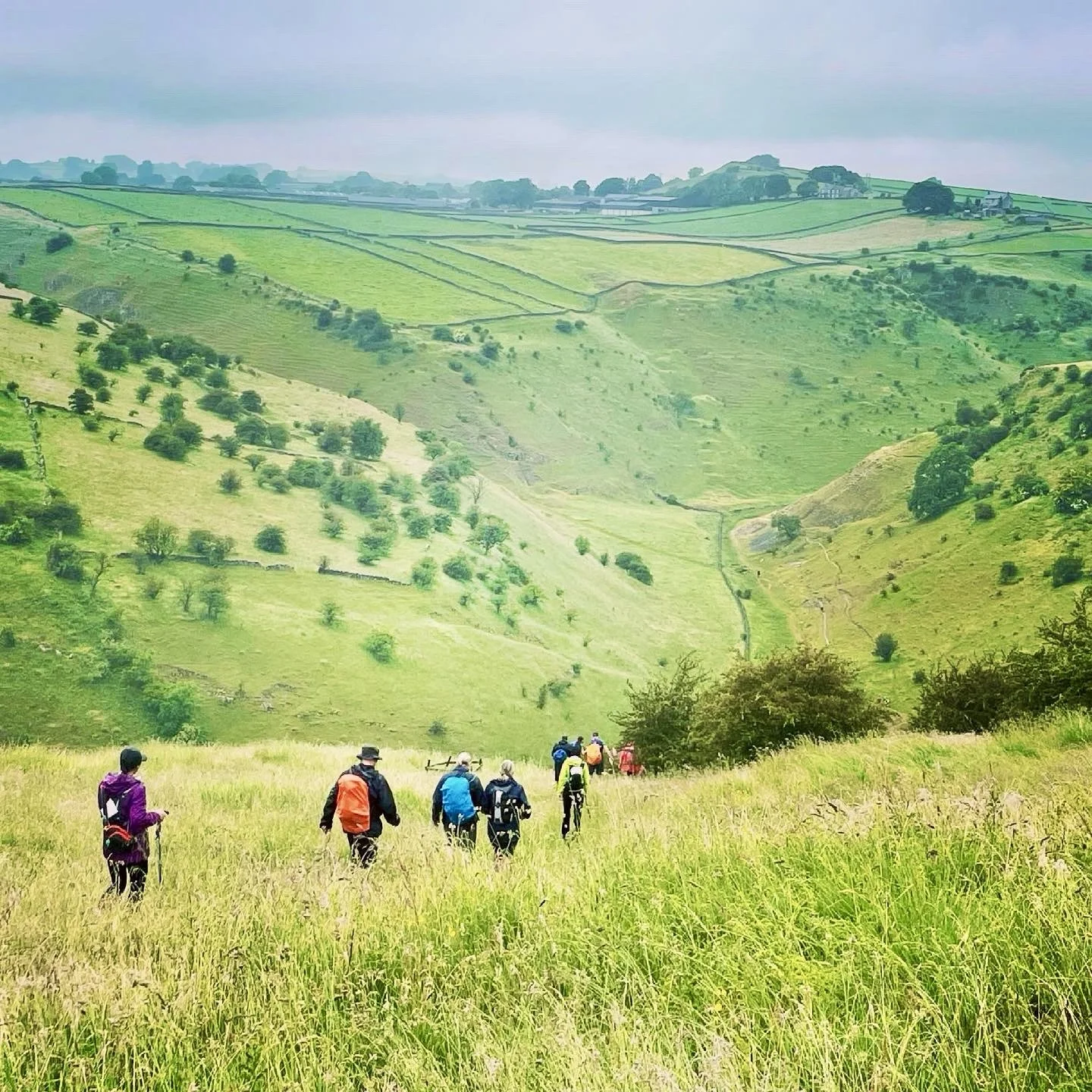
50KM IS SUPPOSED TO FEEL HARD
There will probably be a point when you're tired, uncomfortable and wondering why you paid money to do this. 😄
That's part of taking on a challenge.
But there's also an important difference between being tired and something genuinely being wrong. Don't ignore an injury, illness or serious pain simply because you're determined to reach the finish.
I've had long-distance challenges where I've had to stop, and they've taught me that lesson as much as the ones I've completed.
YOU DON'T HAVE TO FEEL GREAT. YOU JUST HAVE TO KEEP MAKING SENSIBLE FORWARD PROGRESS.
THE FINAL WEEK BEFORE YOUR 50KM CHALLENGE
By the final week, the training is done.
You won't suddenly become fitter by squeezing in another huge walk. What you can do is arrive at the start line tired, sore or carrying a niggle you didn't have a week earlier.
Reduce your mileage, keep your legs moving with a few easy walks and concentrate on arriving rested, organised and ready to go.
EASE BACK
Keep walking, but keep it easy.
No last-minute 20-miler because you're suddenly worried you haven't trained enough. Trust the work you've already put in.
CHECK EVERYTHING
Shoes, socks, backpack, waterproofs, layers, bottles, snacks, foot-care kit, phone and power bank.
Check the organiser's mandatory kit requirements too.
PLAN YOUR LOGISTICS
Know your start time, registration arrangements, parking or transport, rest-stop locations, cut-off times and bag-drop arrangements.
The less you have to think about on the morning, the better.
PRIORITISE RECOVERY
Eat normally, stay hydrated and aim for some decent sleep during the week.
Don't panic if nerves mean you don't sleep brilliantly the night before. One imperfect night's sleep doesn't undo months of training.
ON THE MORNING
Have the breakfast you've already tested, give yourself plenty of time and arrive early enough that you're not rushing through registration.
Get your bag dropped, fill your bottles, use the toilet and get yourself sorted.
And when everyone starts charging off...
Let them.
You've got 50km ahead of you.
YOUR JOB FOR THE FIRST FEW HOURS IS TO MAKE 50KM FEEL EASY.
Start comfortably, eat and drink regularly and resist the temptation to chase other people's pace.
HAVE A PLAN — BUT BE PREPARED TO CHANGE IT
You might have a target finishing time and a carefully planned pace. That's fine.
But weather, terrain, queues at rest stops, sore feet and simply having a bad spell can change things.
Don't let missing an arbitrary target spoil the challenge.
Sometimes the best event-day decision is to slow down, sort out the problem and keep moving towards the finish.
50KM WALKING CHALLENGE FAQs
-
For someone who already walks regularly and can comfortably cover around 10–12 miles, 12–16 weeks is a sensible training period.
If you're starting from a lower fitness base, give yourself longer. Building gradually is far better than trying to cram your training into the final few weeks.
-
No. You don't need to complete the full 50km before event day.
Building towards long walks of around 20–22 miles / 32–35km, combined with consistent weekly walking and some back-to-back sessions, can prepare you for the full distance without putting unnecessary strain on your body.
-
It's only around five miles further, but those extra miles come after you've already walked a marathon.
For many people, that's where tired feet, aching legs, fuelling, pacing and mental fatigue become increasingly important. It's a noticeable step up.
-
This varies considerably according to fitness, terrain, hills, weather and time spent at rest stops.
For many recreational walkers on an organised challenge, 50km can easily become a 10–16 hour day. Check your particular event for cut-off times and use your long training walks to get a realistic idea of your own pace.
-
They're useful, but you don't need to do them every weekend.
During the later stages of training, occasionally following a long Saturday walk with an easier Sunday walk helps you practise walking on tired legs without needing to cover 50km in a single training session.
-
There's no single best option. Trail shoes, walking shoes and lightweight boots can all work depending on the terrain, conditions and your personal preference.
What's far more important is that you've tested your footwear over significant distances before event day. Never start a 50km challenge in brand-new shoes or boots.
-
Eat small amounts regularly and use your training walks to discover what works for you.
Many organised 50km challenges provide food and drink at rest stops, but check your event guide to see what's available. Carry some familiar snacks of your own and consider a mixture of sweet and savoury options.
-
You don't have to, but carrying a spare pair is a very good idea.
Changing into clean, dry socks can be particularly helpful if your feet become wet from rain or sweat. It also gives you a chance to check for hotspots and deal with them before they develop into bigger problems.
-
Someone who is already extremely fit and accustomed to long days on their feet might manage it, but I wouldn't recommend approaching 50km without specific preparation.
Fitness is only part of the challenge. Your feet, legs and joints need to cope with many hours of walking, while you also need to know that your footwear, kit and fuelling strategy actually work.
READY TO TAKE ON 50KM?
50km is a serious walking challenge — but with the right preparation, it's an achievable one.
Build your distance gradually, spend plenty of time on your feet, practise your fuelling and get to know your kit.
Then on event day, start steadily, look after yourself and keep moving forward.
31 miles. One step at a time.
THINKING EVEN BIGGER?
If 50km isn't quite enough, the next step is a different beast altogether.
100km means walking through the day, potentially through the night, and learning how to keep going when you've already been on your feet for many hours.