Why Your Everest Base Camp Itinerary Can Change Overnight
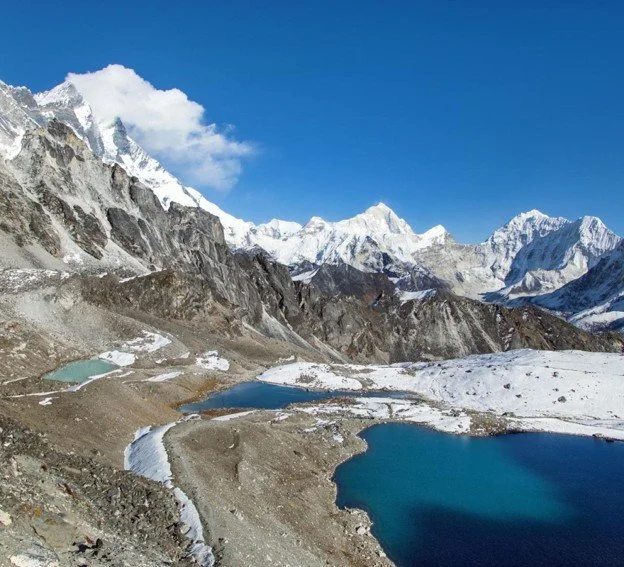
View from Kongma La Pass (5,535m) featuring glacial tarns, Lhotse, and Mt. Makalu on the Everest Three Passes Trek, Nepal.Editor's Note: This article is the first in a new Behind the Trek series, where experienced guides share the stories and decisions that trekkers rarely get to see. If you enjoy it, let me know—I already have ideas for future articles.
Editor's introduction
When I trekked to Everest Base Camp and Gokyo Lakes in 2022, some of the biggest moments of the expedition happened behind the scenes.
Our Lukla flight became a helicopter. Weather dictated our schedule. Crossing Cho La Pass depended on far more than the conditions we could see from the teahouse window.
As trekkers, we only ever hear the final decision:
"We're waiting another day."
"The pass is closed."
"We're taking a helicopter instead."
What we rarely understand is how those decisions are actually made.
After reading my Everest diary, Pawan Bhattarai got in touch with an idea I loved—explaining what happens behind the scenes from a guide's perspective.
If you're planning an Everest trek, this will help you understand why the itinerary printed in the brochure is often just Plan A. When I trekked to Everest Base Camp and Gokyo Lakes in 2022, there were several moments when our itinerary changed because of weather. Helicopters replaced flights, Cho La became a genuine question mark, and there were plenty of decisions happening behind the scenes that we, as trekkers, never saw.
After reading my diary, Pawan Bhattarai got in touch with an idea I loved: explain what those decisions actually look like from a guide's perspective.
If you're planning Everest Base Camp—or simply curious why itineraries change—this is a fascinating insight.
Marc Jerrard
Every Everest trekker eventually hears the same sentence...
"We're not going today."
Usually it comes over breakfast, the evening before, or while you're watching snow drift past the lodge window.
To you, it can feel frustrating—even arbitrary.
You're fit. You feel well. The weather doesn't look that bad.
So why has somebody decided you can't continue?
I co-founded a trekking company in Kathmandu, and our licensed Nepali guides make these decisions every trekking season. This isn't the reassuring version—it's the honest one.
It's rarely about your fitness
One of the biggest misconceptions on the Everest trail is that these decisions are based on the group's fitness.
In reality, they're usually not.
When a guide postpones a crossing, they're thinking about questions like:
How much snow is lying on the far side of the pass?
Has the glacier frozen overnight?
How much daylight will remain if the group is delayed?
If conditions worsen halfway across, can everyone safely turn around?
A very fit trekker at 5,400 metres is still a very long way from help.
Why Cho La behaves differently
Looking at a map, the Three Passes seem remarkably similar.
Kongma La – 5,535m
Cho La – 5,420m
Renjo La – 5,360m
But they behave very differently.
Cho La includes a glacier crossing that can remain icy long after fresh snow has disappeared elsewhere.
That means guides may happily cross Renjo La while deciding Cho La is simply too dangerous.
From the outside, that can seem inconsistent.
In reality, it's experience.
Find out more about Spade's Three Passes trek here
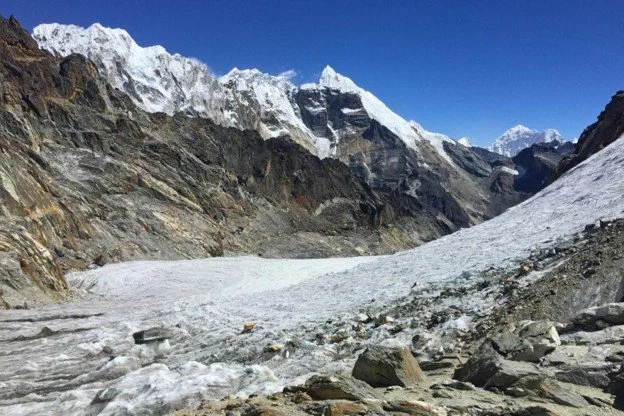
Cho La, 5,420 m. The glacier section holds ice, which is why this pass closes on days when the other two are still crossable.The information guides have - and trekkers don't
Standing outside your lodge, you have one source of information.
The weather.
Your guide has several more.
Before breakfast they may already have spoken to:
guides who crossed the pass yesterday
lodge owners who have watched these mountains for decades
other trekking groups further along the route
the office in Kathmandu monitoring conditions across multiple expeditions
local weather forecasts
By the time your guide says "We're waiting," that decision has probably been discussed by several experienced people.
Much of that conversation has happened long before trekkers have finished breakfast.
Why good guides usually choose to wait
Here's something many trekking companies won't openly admit.
Waiting costs money.
Extra nights in lodges.
Flight changes.
Sometimes helicopter flights.
Every delay eats into profit.
Despite that, experienced guides will still delay a crossing when they're uncertain.
Why?
Because the consequences aren't equal.
Waiting one day might be inconvenient.
Making the wrong decision above 5,000 metres can have far more serious consequences.
One saying guides often live by is:
If we're uncertain, we wait.
Not because it's easier.
Because it's safer.
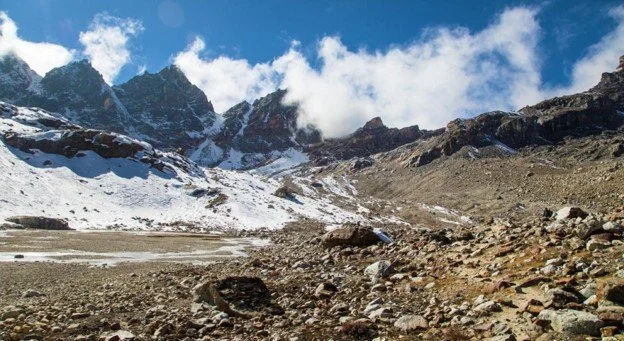
Looking toward Renjo La, 5,360 m, from the Gokyo valley. Snow lying on the approach slopes and cloud building over the ridge are exactly what a guide is reading on the morning of a pass day.Why Lukla causes so many problems
Lukla Airport is famous for a reason.
Its runway is just 527 metres long, climbs at an 11.7% gradient, and has no instrument approach.
Pilots need clear visibility.
That's why early morning flights have a much better chance of operating than later departures.
When flights stop, guides don't simply panic and hope.
They start working through a series of options.
Depending on where the group is in the itinerary, that might include:
waiting for conditions to improve
sharing available helicopter seats
driving to Salleri or Ramechhap
redesigning the trek entirely
The best option depends entirely on where the group is and how much flexibility remains.
The most valuable thing you can build into an Everest trek
It isn't expensive boots.
It isn't a lighter backpack.
It isn't even choosing the strongest group.
It's buffer days.
Two spare days in your itinerary can turn what would have been a failed expedition into nothing more than a memorable story.
If you're comparing trekking companies, don't just compare the price.
Compare the flexibility built into the itinerary.
Three questions to ask before booking
If you're choosing an Everest operator, ask these three questions.
1. How many buffer days are included?
A little flexibility can make all the difference.
2. Who makes the final safety decisions?
The guide on the mountain—not someone sitting behind a desk—should always have the final say.
3. What's the backup plan if Lukla closes?
An experienced operator should be able to answer immediately.
The honest truth
Most reroute decisions aren't dramatic.
They're the result of experienced people sharing information, comparing conditions and deciding the mountain will still be there tomorrow.
Trekkers only hear the final decision.
Guides carry the responsibility for making it.
And sometimes the bravest decision isn't pushing on.
It's waiting.
Because the mountain isn't going anywhere.
And neither, today, are you.
Pawan Bhattarai
Planning your own Everest adventure?
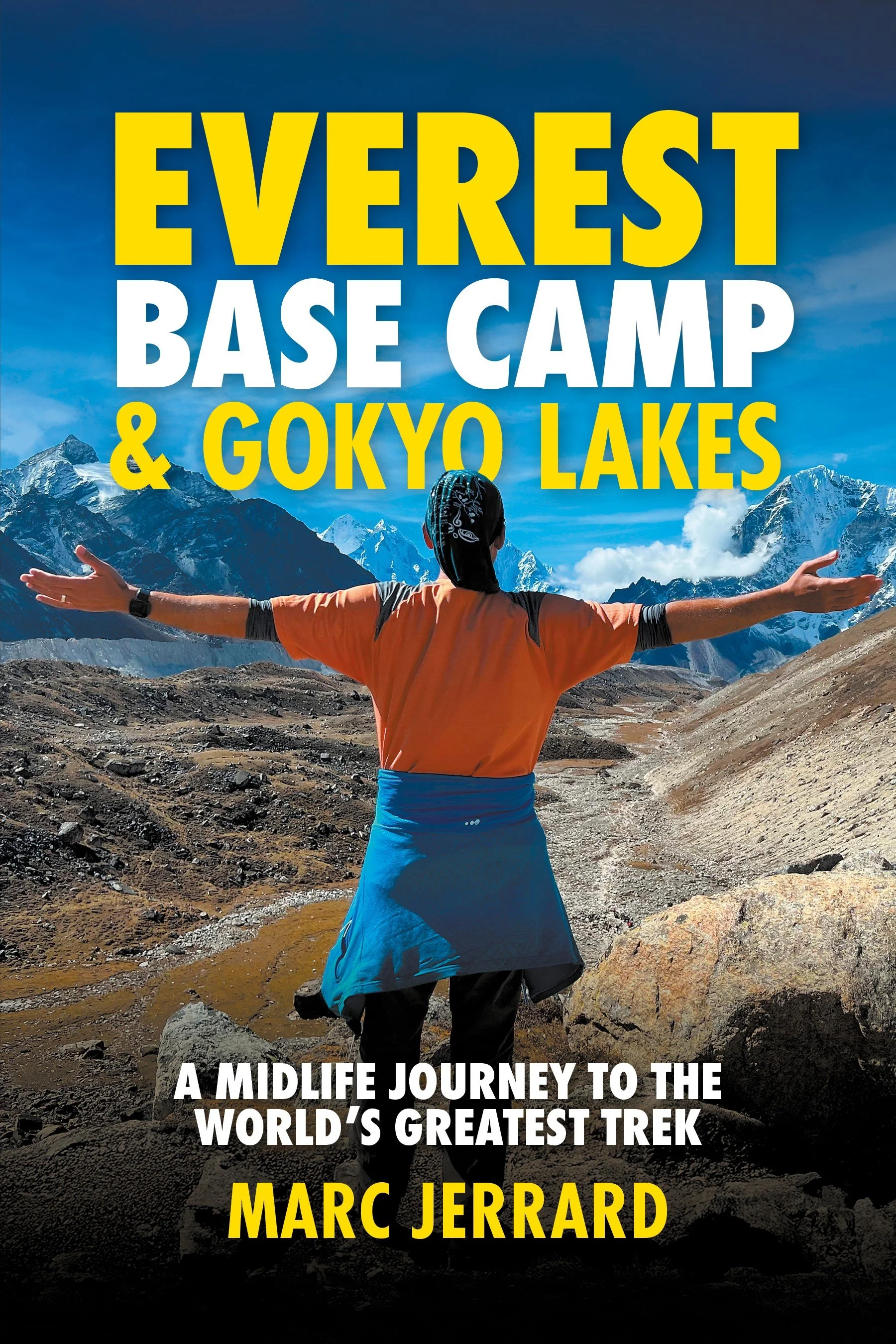
If you'd like to read what these decisions look like from a trekker's perspective, my book Everest Base Camp & Gokyo Lakes: A Midlife Journey to the World's Greatest Trek follows my 2022 journey day by day—including helicopter diversions, weather delays, Cho La Pass and the unexpected moments that no itinerary can predict.