

Sponsored content: This article was produced in collaboration with a content partner and includes a paid link to Adventure Alternative. It has been edited and supplemented with personal trekking experiences and photographs by Marc Jerrard of Walking in Circles UK.
Nepal offers more than one kind of Himalayan adventure. Some trails wind between Sherpa villages beneath Everest; others reach vivid glacial lakes, high mountain sanctuaries or remote settlements shaped by centuries of trade and Buddhist culture.
Choosing a trek is therefore about more than finding the biggest mountain view. Time, altitude, terrain and the experience you want along the way all matter.
These five routes offer very different journeys. Durations are approximate and depend on acclimatisation days, route variations and travel arrangements.

Gokyo Lakes: glacier-fed colour in the Khumbu
The Gokyo Lakes trek follows the western side of the Khumbu towards a chain of striking turquoise lakes beside the vast Ngozumpa Glacier. Gokyo village sits by the third lake, at around 4,790 metres, with Cho Oyu rising beyond it. For trekkers drawn to high-altitude scenery without simply retracing the classic Everest Base Camp route, it is a compelling choice.
On a clear day, the climb up Gokyo Ri, approximately 5,357 metres, rewards you with views towards Everest, Lhotse, Makalu and Cho Oyu. Duration and difficulty are important considerations when choosing a Gokyo Lakes trek. The standard route typically takes 11 to 14 days, while experienced trekkers can extend the journey across the challenging Cho La Pass to connect with the Everest Base Camp trail.
From the trail — Marc, Walking in Circles UK:
In 2022, I reached Everest Base Camp first, then crossed the formidable Cho La Pass at 5,420 metres on my way to Gokyo Lakes. The crossing was one of the toughest and most rewarding parts of the trek. We had hoped to climb Gokyo Ri, but the weather ruled it out. It was a reminder that in the Himalayas, the mountains—not your itinerary—have the final say.
Most routes begin with a flight to Lukla. Build in acclimatisation days and flexibility for flight disruptions, and confirm current permits and guide requirements with your operator before travelling.
Annapurna Sanctuary: a natural amphitheatre
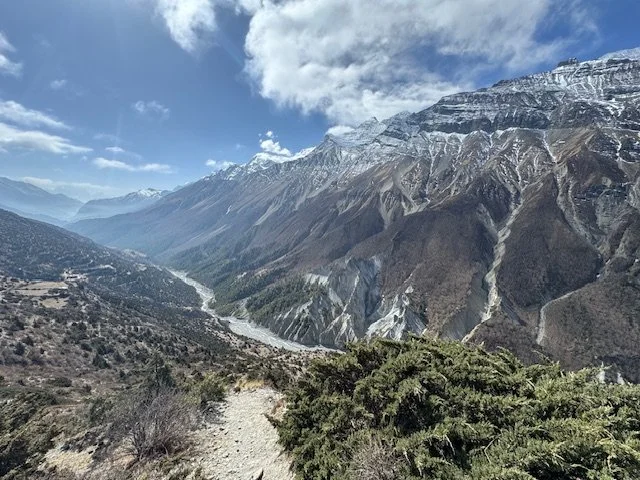
The Annapurna Sanctuary trek rises from farmland and rhododendron forest into a dramatic basin enclosed by Himalayan giants. The approach through Gurung villages and the Modi Khola valley creates a sense of progression as wooded hillsides give way to towering rock and snow.
At Annapurna Base Camp, around 4,130 metres, trekkers are surrounded by peaks including Annapurna I, Annapurna South, Hiunchuli and Machapuchare. The changing light at sunrise is a major attraction. Routes commonly pass Chhomrong, Deurali and Machapuchare Base Camp before reaching the Sanctuary.
Allow roughly seven to ten trekking days, depending on your starting point. Stone staircases, steep climbs and altitude make this a demanding walk despite its relatively compact itinerary. Spring can bring rhododendron flowers; autumn often offers clearer skies. Check current Annapurna Conservation Area Permit, guide and registration rules.
Upper Mustang: desert landscapes and living history
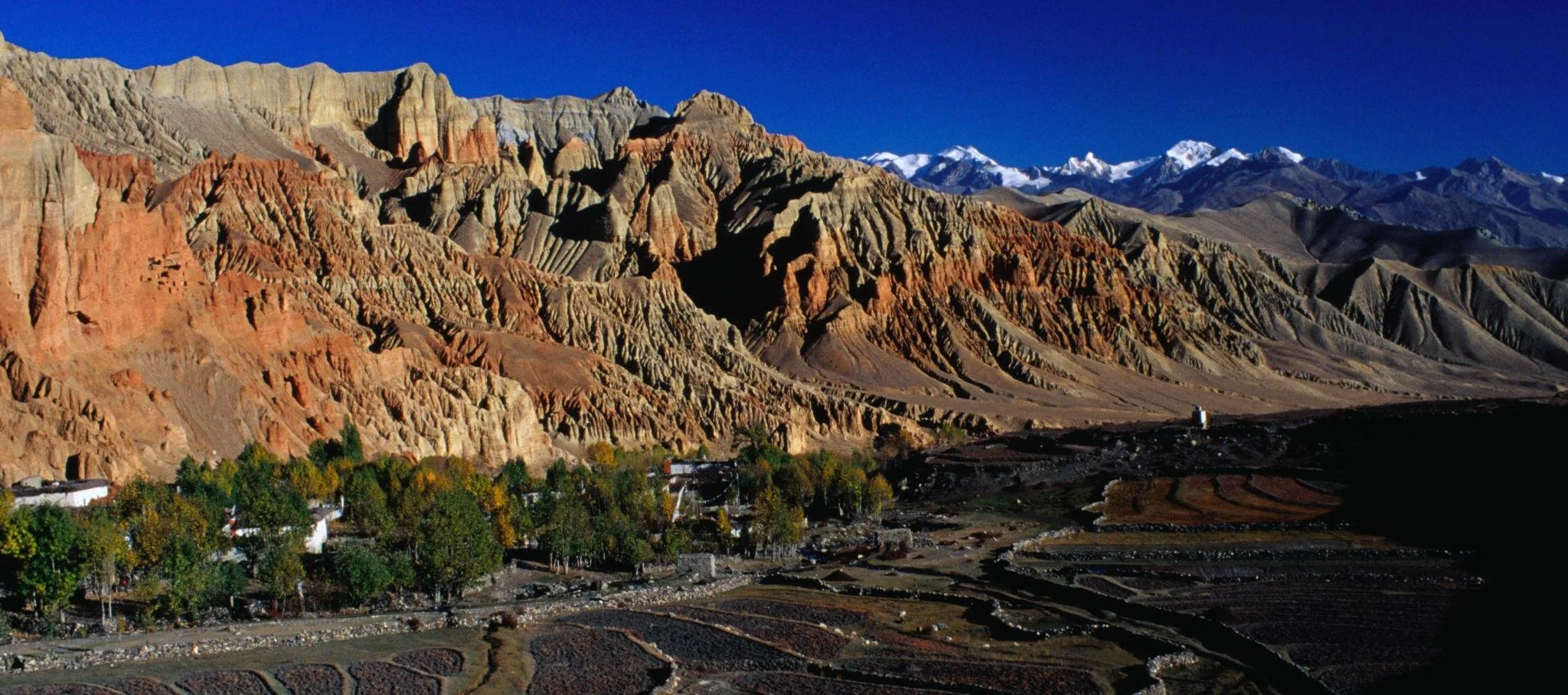
Upper Mustang, Nepal. Photo: Supradai / Wikimedia Commons, CC BY 4.0.Upper Mustang feels unlike the greener trekking valleys farther south. In the rain shadow of the Annapurna and Dhaulagiri ranges, its trails cross dry plateaus and ochre cliffs, passing cave settlements, Buddhist monuments and villages with strong Tibetan cultural connections.
The journey’s focal point is Lo Manthang, the historic walled capital of the former Kingdom of Lo. Its monasteries and narrow streets offer a cultural dimension that is just as important as the mountain scenery. The walking is generally less technical than a high-pass expedition, but wind, exposure and elevations approaching 4,000 metres still demand preparation.
Many itineraries take 10 to 14 days and approach via Jomsom and Kagbeni. The region can be an option during the summer monsoon, although access routes may still be affected by weather. Restricted-area permits and licensed guiding arrangements must be organised in advance through an authorised agency.
Kanchenjunga: a remote expedition
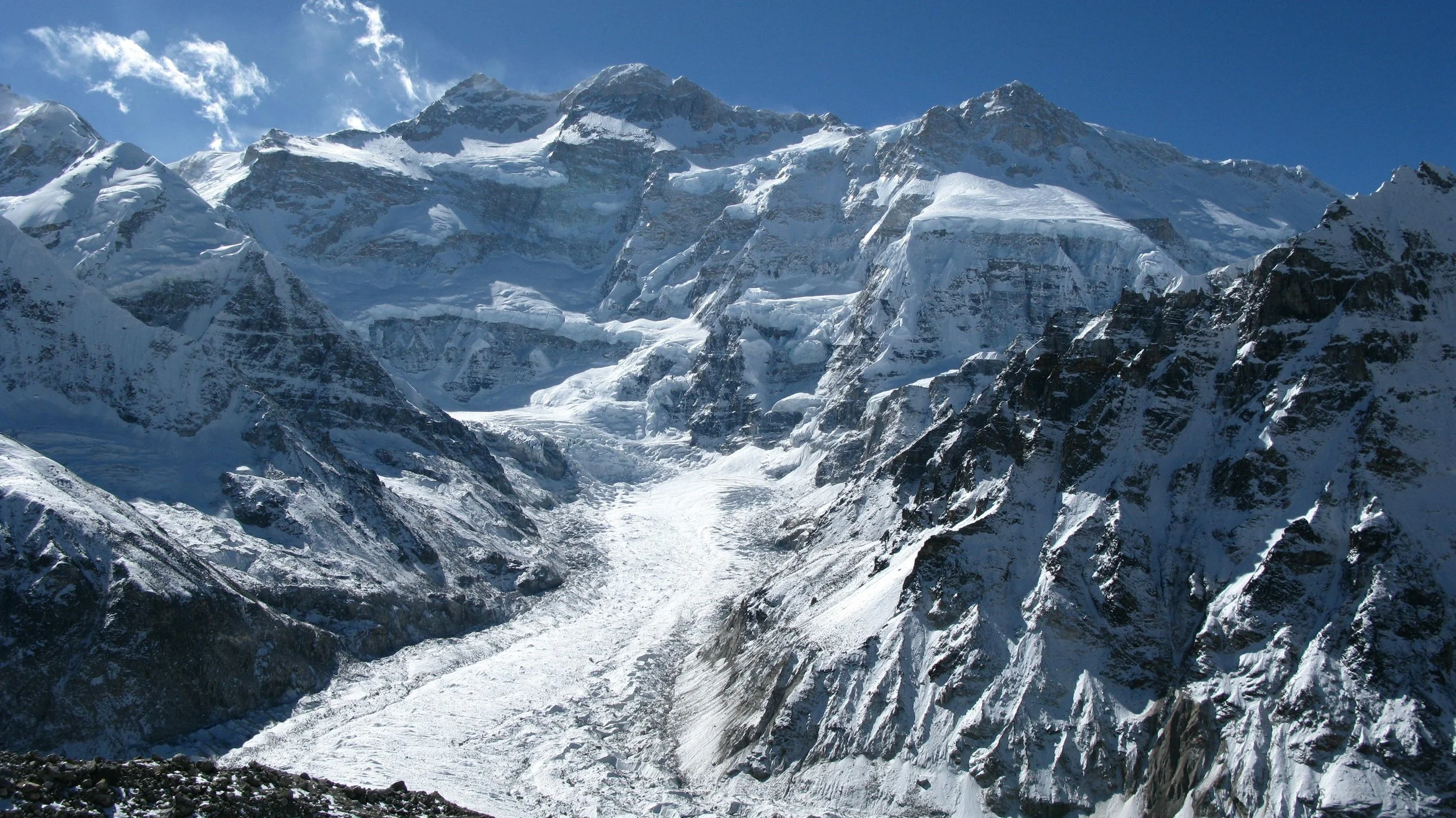
Kanchenjunga, Nepal. Photo: Bruno Rijsman / Wikimedia Commons, CC BY 2.0.In eastern Nepal, the trails beneath Kanchenjunga, the world’s third-highest mountain at 8,586 metres, offer a longer and less travelled Himalayan experience. Routes begin among villages and forested valleys before reaching alpine meadows, glaciers and rugged upper terrain.
Trekkers may head north towards Pangpema, near the north base camp, or south towards the Oktang viewpoint above the Yalung Glacier. Longer circuits combine the two areas by crossing demanding passes, where snow and weather can alter plans quickly.
A full circuit commonly takes three weeks or more. Accommodation is simpler, the approach journey is substantial and flexibility is essential. This is best suited to experienced trekkers comfortable with remote conditions. Check conservation-area and restricted-area permit requirements and travel with the required licensed support.
Everest Base Camp: the classic Khumbu journey

The Everest Base Camp route begins at Lukla and climbs through the Dudh Koshi valley towards Namche Bazaar. Suspension bridges, prayer flags and mani stones accompany the journey, while Tengboche Monastery provides one of the best-known cultural stops beneath Ama Dablam.
Beyond Dingboche and Lobuche, the trail reaches Gorak Shep and Everest Base Camp at around 5,364 metres, beside the Khumbu Glacier. The summit of Everest itself is not clearly visible from base camp; trekkers often climb Kala Patthar for the classic mountain panorama.
From the trail — Marc, Walking in Circles UK: Reaching Everest Base Camp in 2022 was a huge personal milestone, but what stays with me is far more than the destination. The Sherpa communities, the gradual climb through the Khumbu and the sheer scale of the mountains made the journey unforgettable. It was the starting point of a bigger adventure that later took me over Cho La and onwards to Gokyo Lakes.
A standard itinerary often takes around 12 to 14 days. Acclimatisation, cold weather and possible Lukla flight delays need to be built into the plan. Confirm current park, local-entry and guiding requirements before departure. For more practical advice, explore my complete Everest Base Camp trekking guide.
Which Himalayan trail will you walk?
Choose Gokyo for glacial lakes and big-mountain panoramas; Annapurna Sanctuary for an immersive amphitheatre of peaks; Upper Mustang for desert scenery and culture; Kanchenjunga for remoteness; or Everest Base Camp for the iconic Khumbu trail.
Whichever appeals most, resist the temptation to compress acclimatisation days. The right itinerary is one that matches your fitness, experience and available time, leaving room to enjoy the landscape rather than simply racing to the next waypoint.
For a firsthand account of the Everest Base Camp, Cho La and Gokyo Lakes journey, see Marc’s book, Everest Base Camp & Gokyo Lakes: A Midlife Journey to the World’s Greatest Trek.
At-a-glance trek comparison
On mobile, swipe across the table to see all the details.
| Trek | Duration | Key attraction | Considerations |
|---|---|---|---|
| Gokyo Lakes | 11–14 days | Turquoise lakes, Gokyo Ri | High altitude; optional Cho La |
| Annapurna Sanctuary | 7–10 days | Peaks surrounding base camp | Steep steps and climbs |
| Upper Mustang | 10–14 days | Lo Manthang, arid landscapes | Restricted-area permits |
| Kanchenjunga | 3+ weeks | Remote glaciers and valleys | Long approach, limited facilities |
| Everest Base Camp | 12–14 days | Khumbu villages and base camp | Altitude and flight delays |