


The riverside walkway on London’s South Bank shows why a well-connected walking route can become part of the sightseeing experience.Photo credit: chris.rycroft / Wikimedia Commons (CC BY 2.0)
Image source: Original photograph on Wikimedia Commons
Licence: Creative Commons Attribution 2.0
There’s a difference between a city you can walk around and one that makes you want to keep walking. Two attractions might look close on a map, but the route between them could mean a steep climb, an awkward crossing or a long detour. Somewhere else, a much longer walk might be the best part of the day.
At Walkable Weekend, we ask a practical question: could someone spend two or three days exploring this city mainly on foot, without needing a car? We’re not measuring how far a determined walker can go. We’re looking at how easily an enjoyable city break comes together.
Start with the places you actually want to visit
A city can have lovely pedestrian streets and still be inconvenient for a visitor if the places they want to see are scattered miles apart. The important question is whether sights, neighbourhoods and places to eat form sensible walking days.
London illustrates this well. Westminster and the South Bank offer rewarding routes linking major sights. The museums of South Kensington form another convenient cluster. But these are not all one small neighbourhood. A short Tube journey between areas can leave more time for exploring the streets once you arrive.
For those wanting to explore London beyond the usual tourist routes, the Original London Monopoly Walk offers a different perspective, connecting famous landmarks with lesser-known streets and neighbourhoods along the way.
We also look at where visitors can realistically stay. A well-placed base means the first walk of the morning can begin at the hotel door, rather than after a complicated transfer.
The quality of a walk matters as much as its length
Distances on a screen do not tell the whole story. Are the pavements continuous? Are there sensible crossings? Do bridges connect the places you want to visit, or does a river force a long diversion? Will hills and steps make the second half of the day more demanding than the first?
A walk beside a river, through a park or along an interesting street can feel like sightseeing in its own right. The same distance beside heavy traffic may feel like something to endure. Crowds, surfaces and step-free options matter too, especially because a route that suits one visitor may be difficult for another.
For a short break, the best route is rarely the one that simply covers the most miles. It is the one that leaves room to notice what is happening between the landmarks.
London's Thames Bridges Walk is a great example, combining riverside paths, distinctive bridges and changing views of the capital into one memorable walking experience.
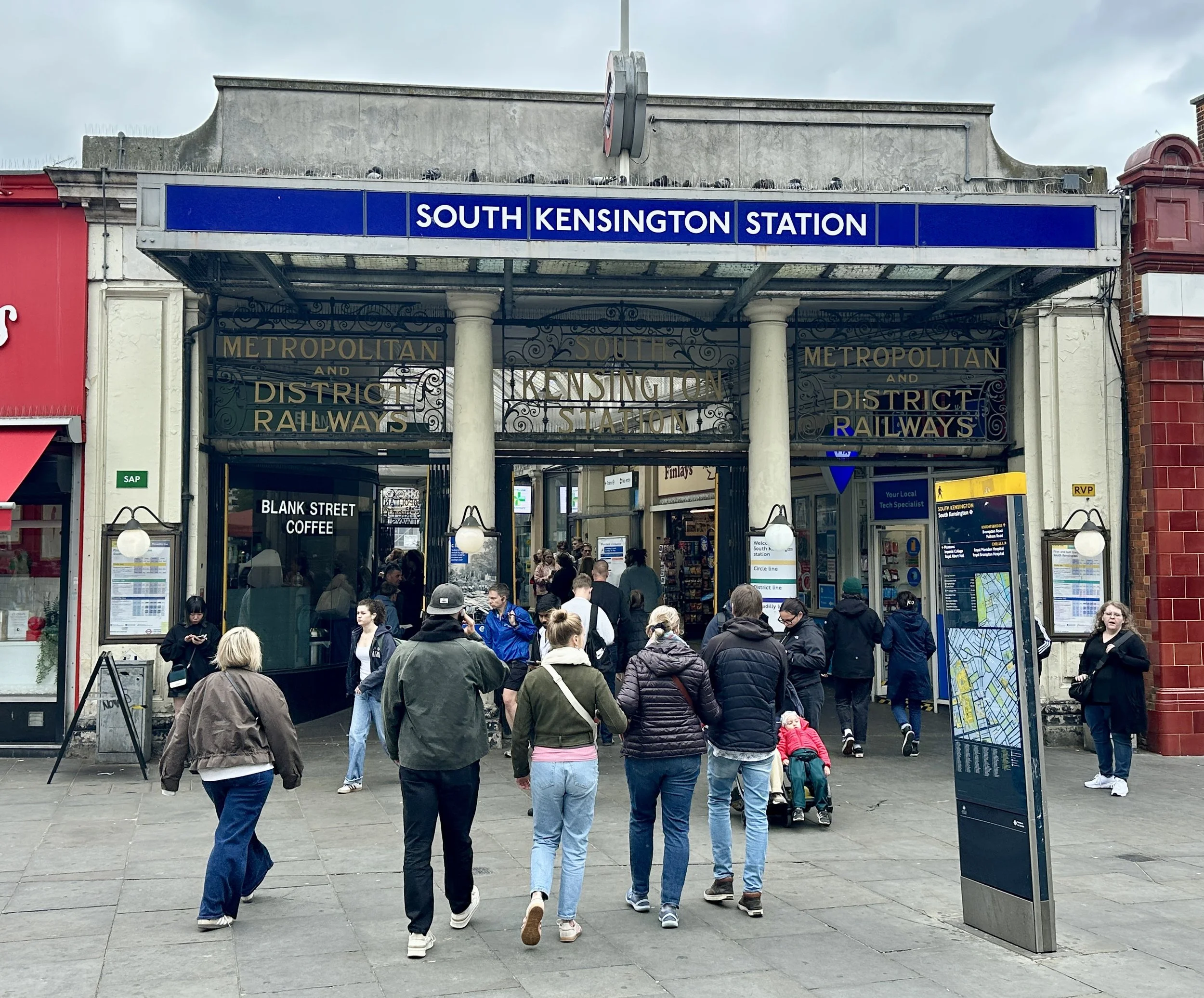

Image Source: South Kensington Station - Wikipedia Commons

South Kensington Underground station illustrates how public transport can connect separate London sightseeing areas.
Photo credit: APK / Wikimedia Commons (CC BY 4.0)
Licence: Creative Commons Attribution 4.0
Using public transport is not cheating
A walking-friendly city does not require you to walk everywhere. Good buses, trams, trains and underground services can connect excellent walking areas without turning an afternoon into an endurance test.
We pay attention to whether transport actually serves the places visitors want to reach, how straightforward it is to use and whether it remains useful at weekends and in the evening. A network may look impressive on paper but be less helpful when its key services are infrequent or difficult to connect.
Sometimes the smartest walking decision is to take a train for ten minutes and enjoy the next neighbourhood properly.
The car-free test begins before you arrive
There is one part of a weekend that travellers can easily overlook: the journey from the railway station or airport to their accommodation. An otherwise walkable centre becomes less convenient if reaching it requires expensive transfers or a car.
We therefore consider arrival as part of the whole experience, not an afterthought. A simple rail or bus connection can make a big difference to how confidently someone plans a car-free trip.
Try the two-day test
Before booking your next city break, mark the places you most want to see on a map. Divide them into two realistic walking days, rather than one heroic list. Check where you would stay, which streets or paths actually connect the stops, and where public transport would save an uninteresting stretch.
Then ask a final question: will this plan leave time to stop for a coffee, wander down a side street or follow something unexpected? If the answer is yes, you may have found a genuinely walkable destination.
Walking should make a city feel more open, not turn a weekend into a race. The best places let you enjoy the journey as much as the arrival.
Walkable Weekend methodology: